A Look at My Fountain Pens
The first time I used a fountain pen was in Grundschule, the German primary school system. I believe I was 7 or 8 years old, though it might have been a few years later. Back then my father bought me a Lamy Safari, and I only used cartridges. I had tons of them. He would usually buy a box of blue ink cartridges (or Königsblau in German). I didn’t even know that I could buy a bottle of ink, use a converter, or that there were fountain pens with piston fillers.
After leaving Germany, I eventually stopped using fountain pens. At university, I only used mechanical pencils (Rotring) and a rollerball for exams. With time, I somehow forgot that I ever used fountain pens, until around 2007 or 2008 when I got back into them.
When I was a kid back then, it was a necessity and a tool. When I grew up, it became a pleasure. I discovered the beauty of using a fountain pen, the various ink colors, and of course the variety of papers.
I bought a few fountain pens again and realized how much I love to write. My journaling habits also improved, and with that the joy of using a fountain pen became something I truly appreciated.
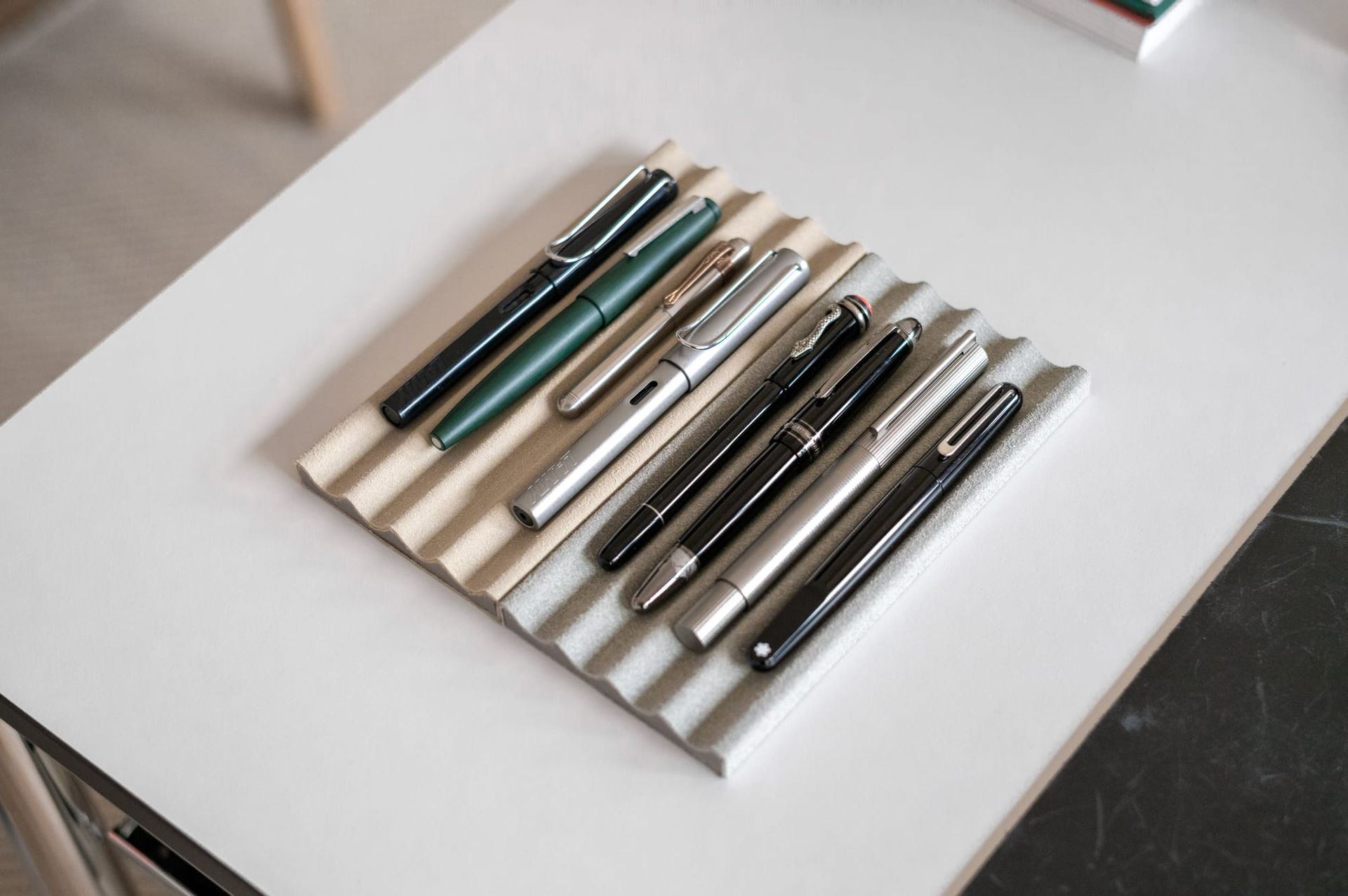
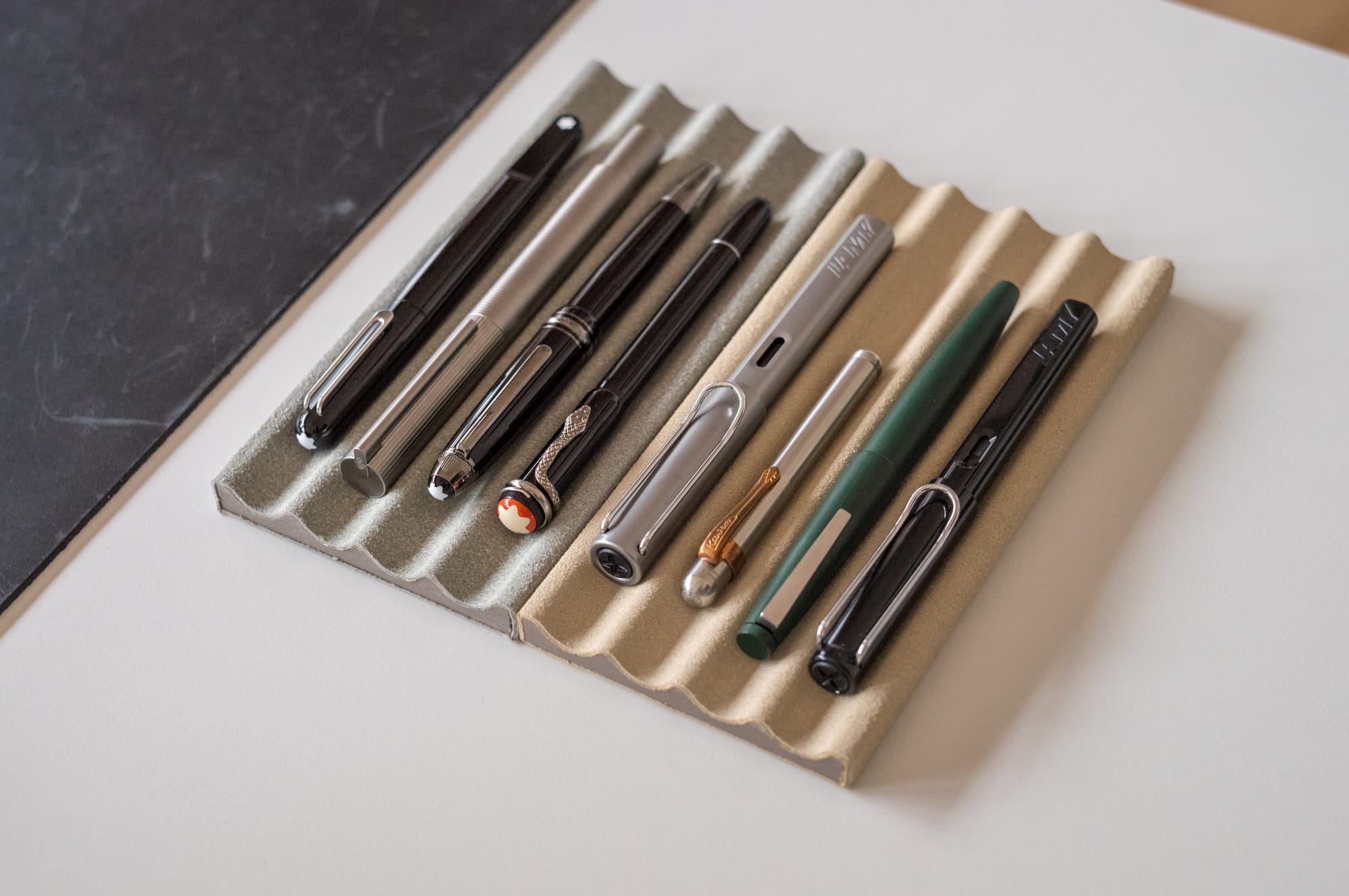
When I shared a few pictures of my room (and with that the pens on my desk), people would often ask “what do you use as a fountain pen?” So I thought I would share my current collection. Some of these pens I use extensively every single day, some are for collection purposes only, and some were gifted to me and have sentimental value.
I’ll explain the pens in the order I purchased them. Let’s start with my first fountain pen ever.
Lamy Safari
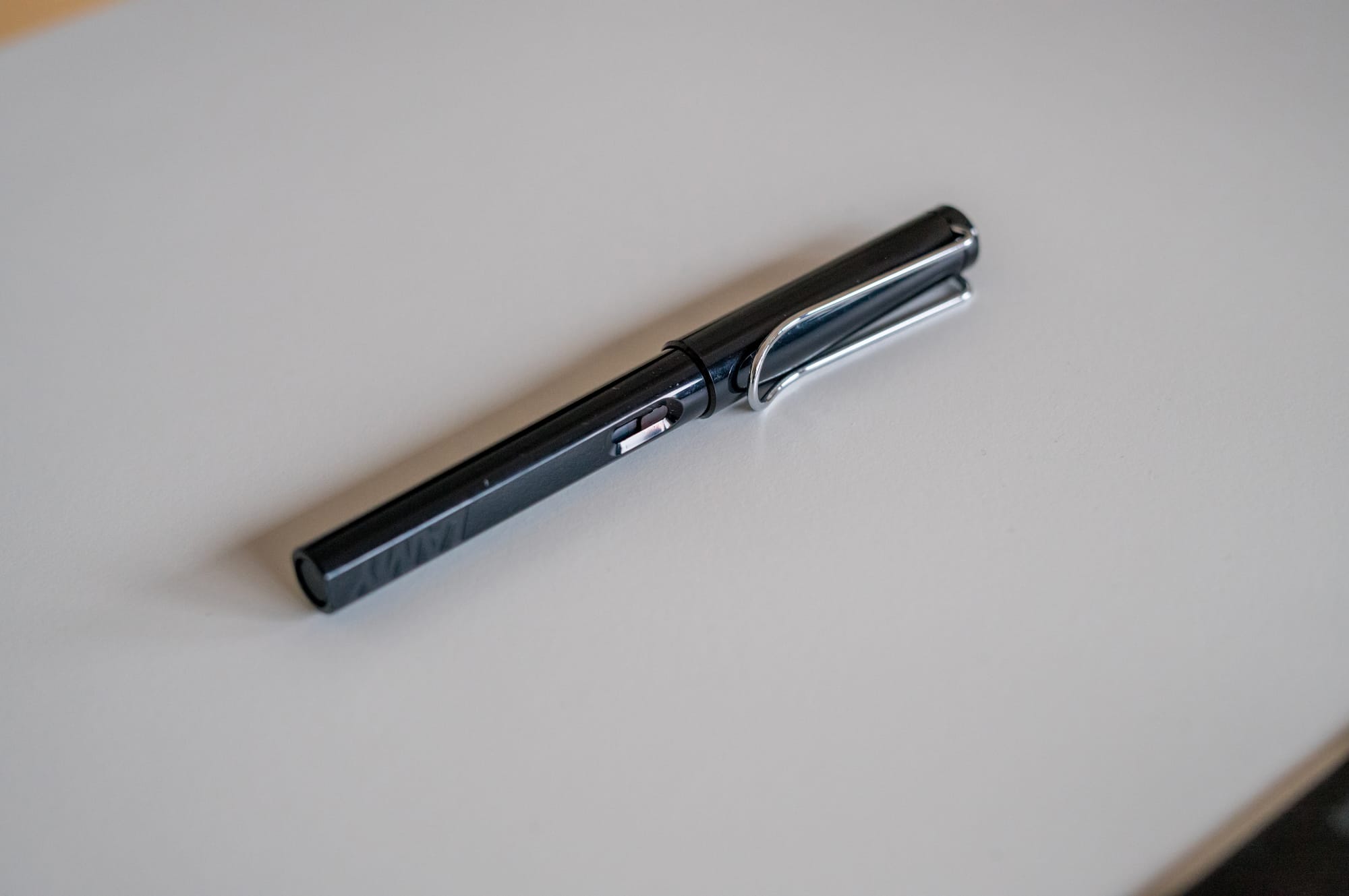
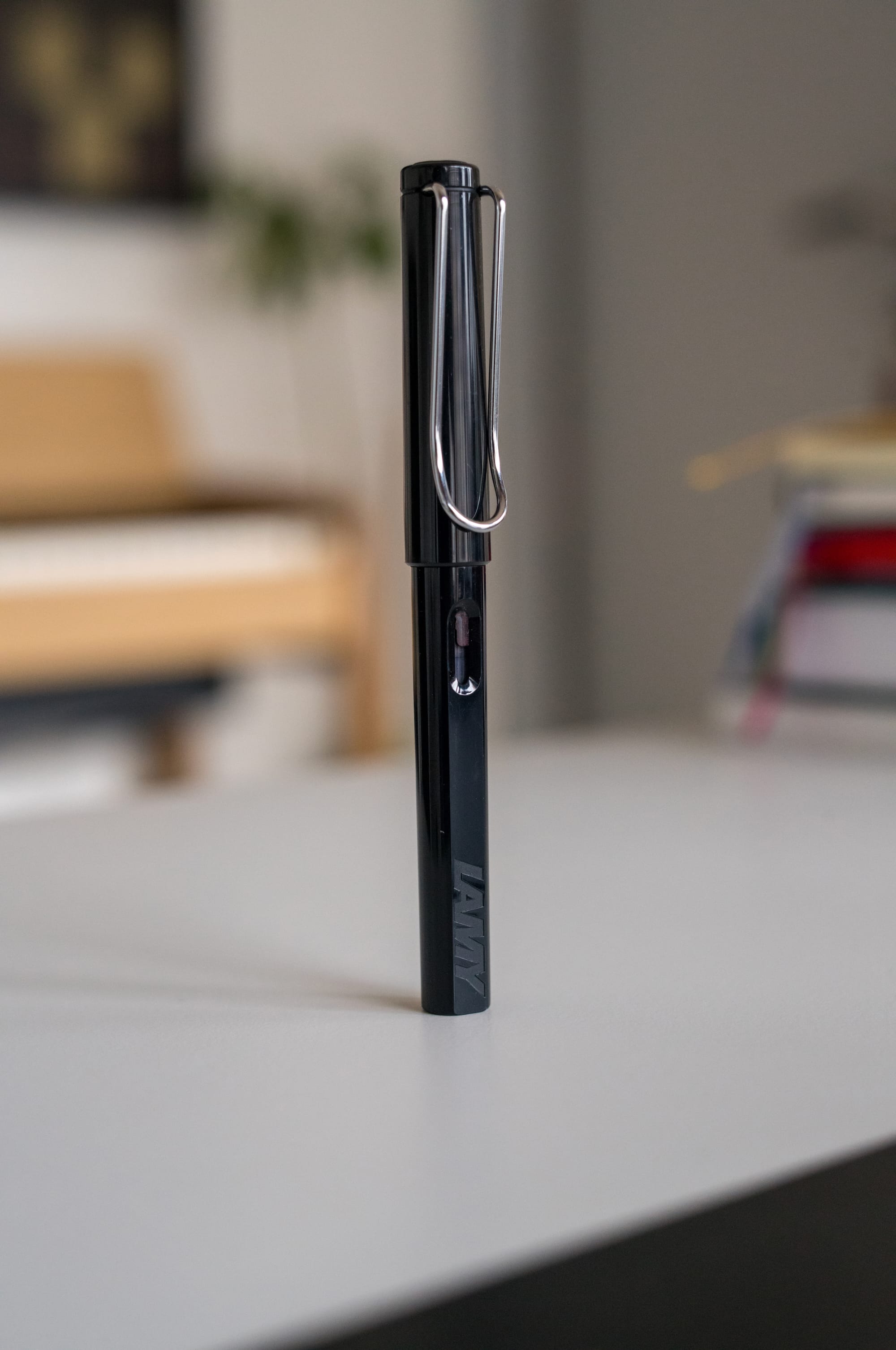
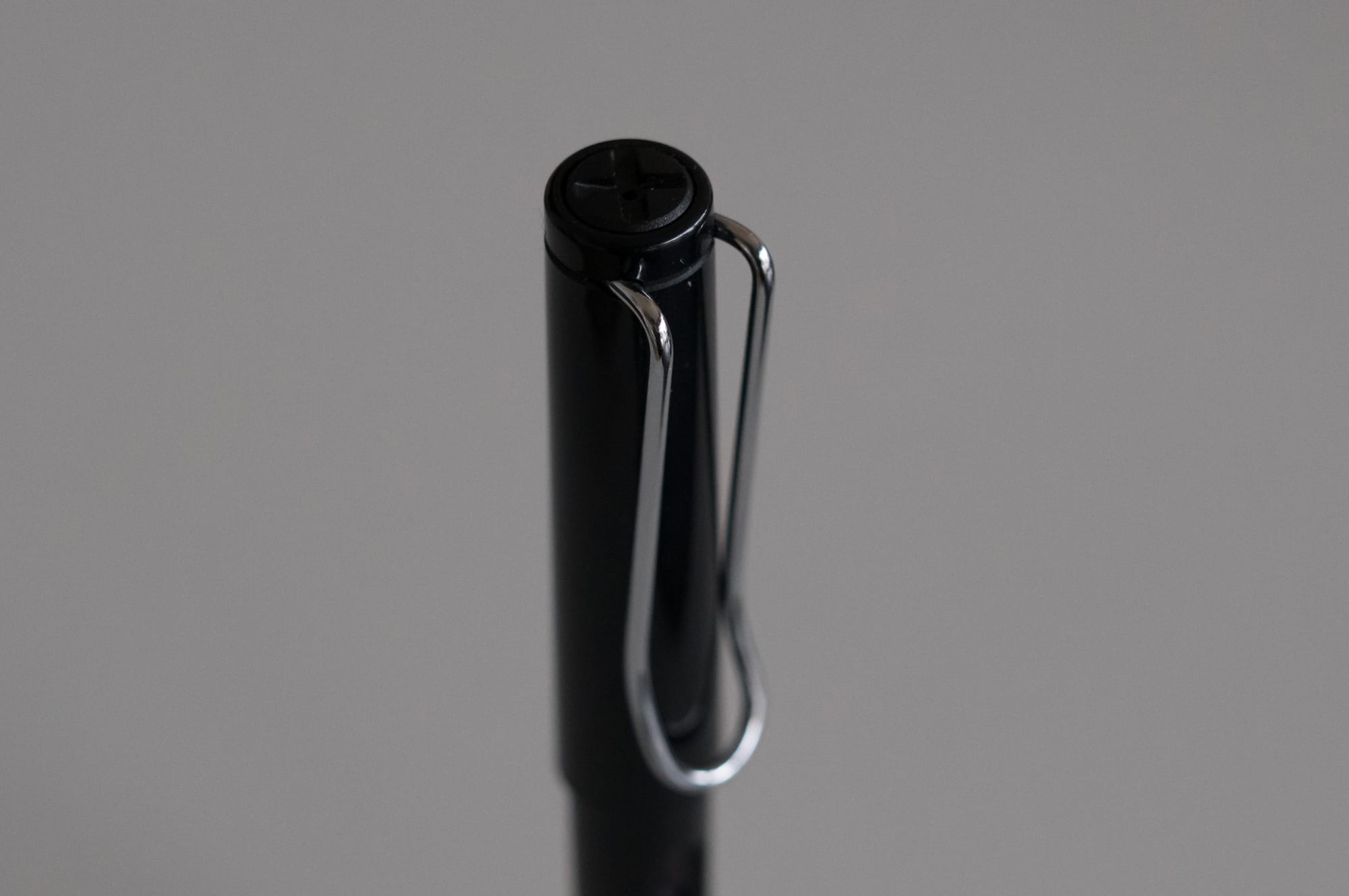
This one is at least 20 years old. I don’t know when or how I got it. My father probably bought it. For a very long time, this was my one and only fountain pen. I bought a converter and started using Lamy Blue ink. It still works fine, though after getting other pens I stopped using it. My daughter uses it now.
Lamy 2000, Gerd Müller Limited Edition
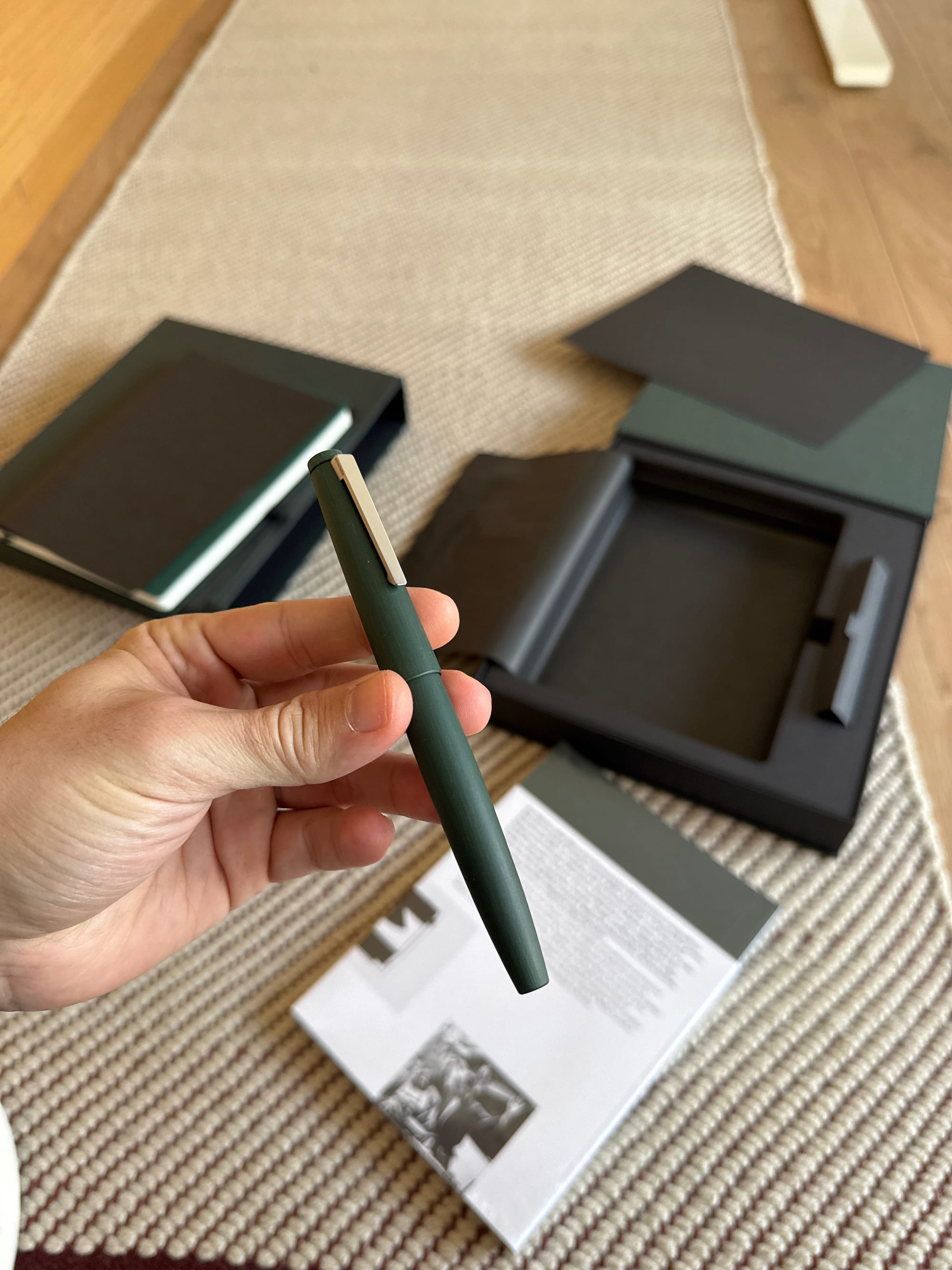
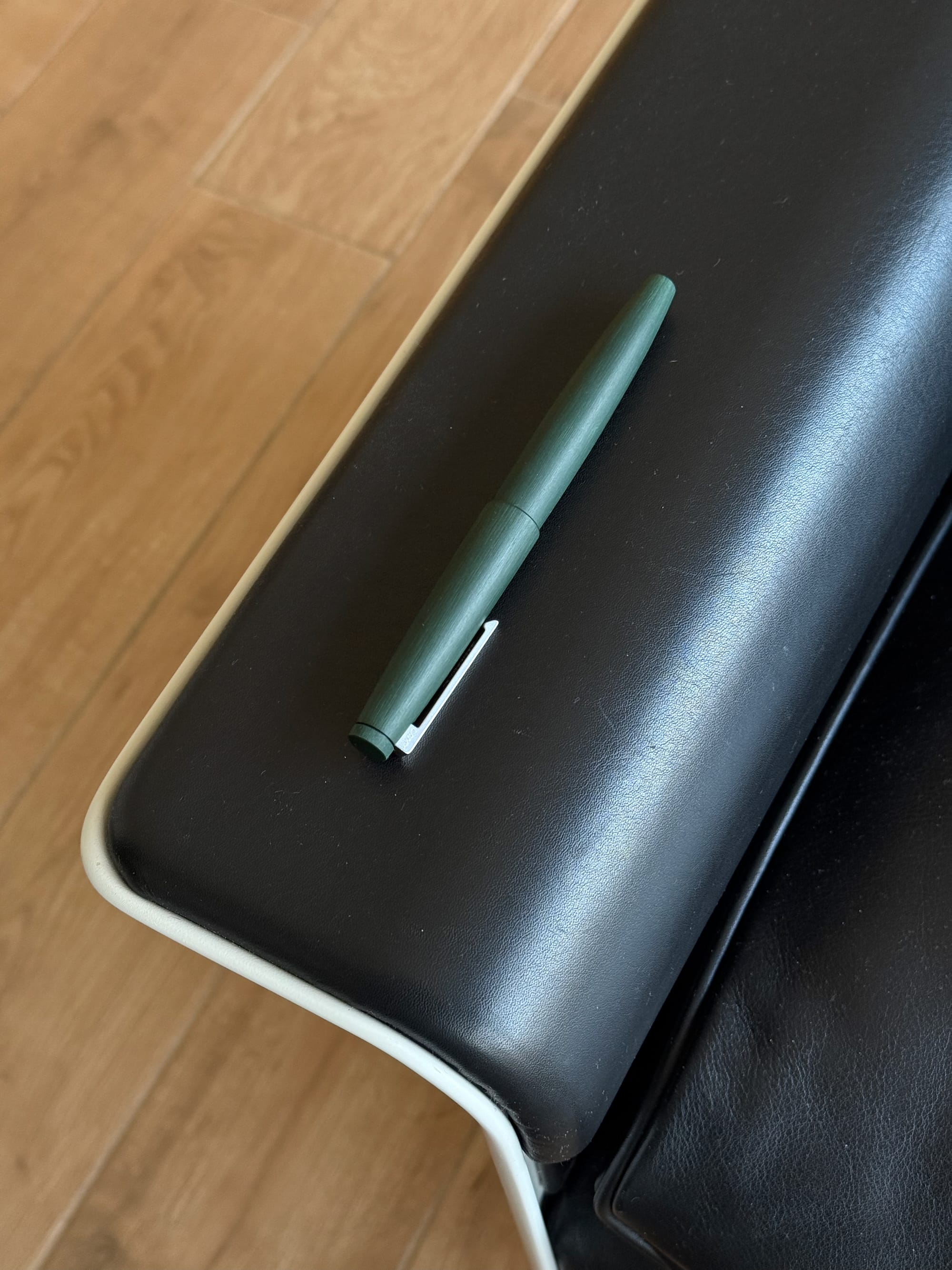
As a huge Dieter Rams and Braun fan, I didn’t know that Gerd Müller, one of the Braun designers who worked alongside Dieter Rams, designed the Lamy 2000. It’s still produced today and loved by many. It’s one of the most recommended pens, has a gold nib, and works flawlessly. The design reminds me of the 60s and has a corporate vibe to it, but it’s a workhorse and people love it for good reason. I believe it’s around 200–250 USD.
The one I have is the Limited Edition dedicated to Gerd Müller. It’s green, came in a special box with a book about his life, and included a really nice Lamy notebook. It’s my everyday pen for taking notes. It was also my first fountain pen with a gold nib, and now I understand why gold matters. It’s flexible and gives a better writing experience compared to steel nibs. It’s currently inked with Montblanc Permanent Blue.
Kaweco Liliput
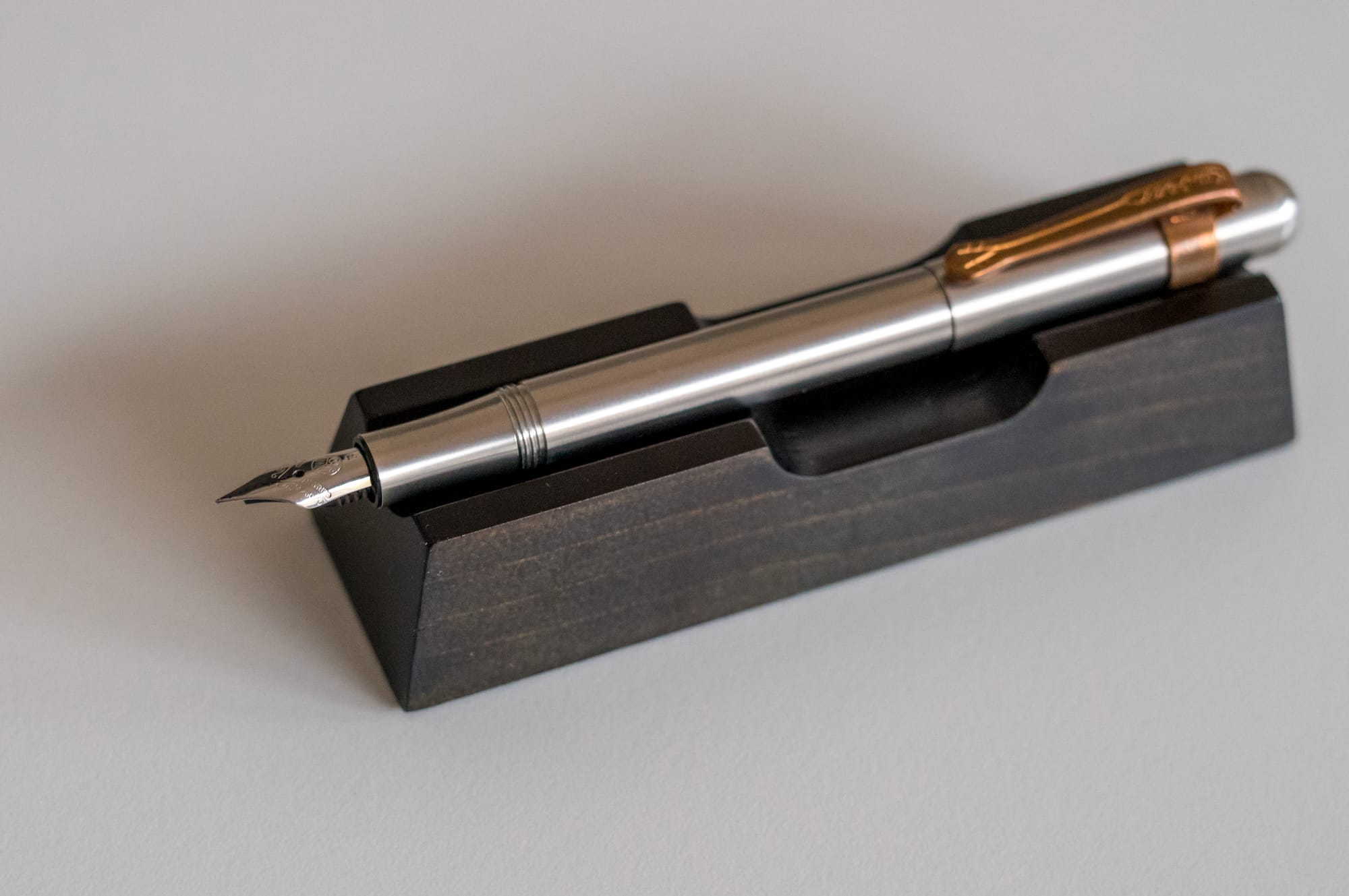
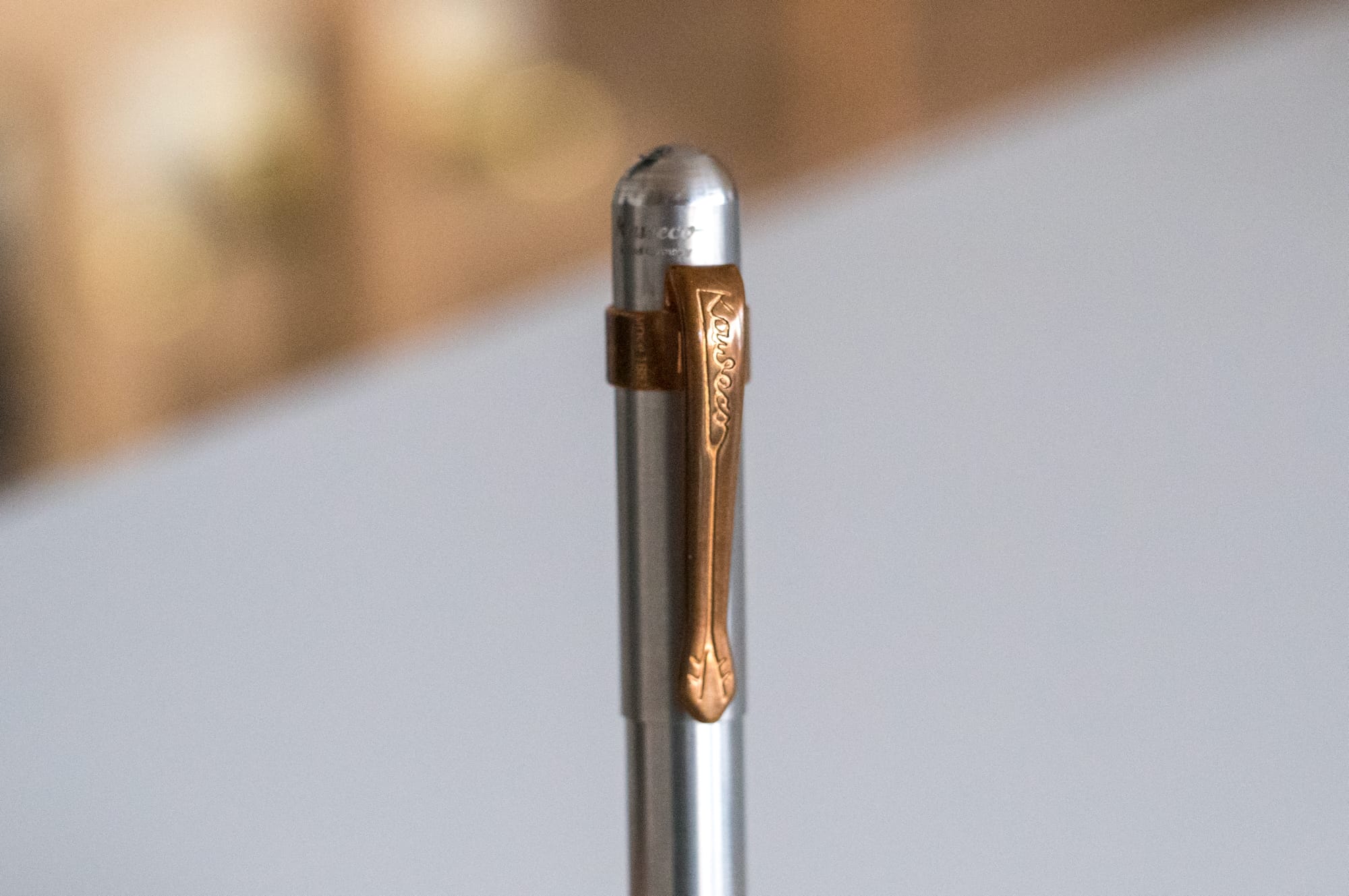
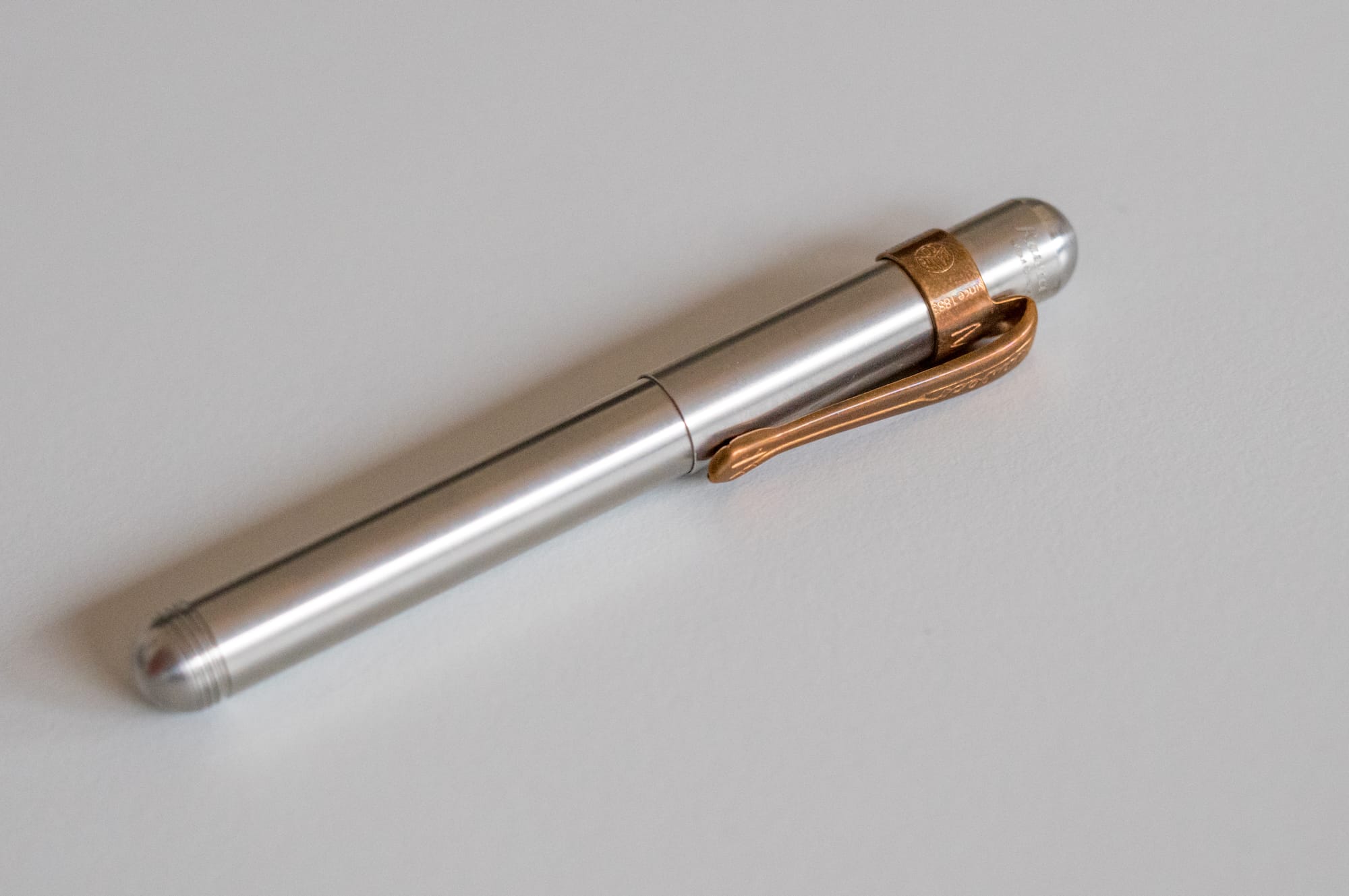
The only reason I have this was because I never owned a Kaweco, and it was so small that the design intrigued me. It surprisingly writes very well. Because it’s small, it only accepts ink cartridges. I don’t have much use for it, so it’s mostly part of my collection.
Lamy Al-Star
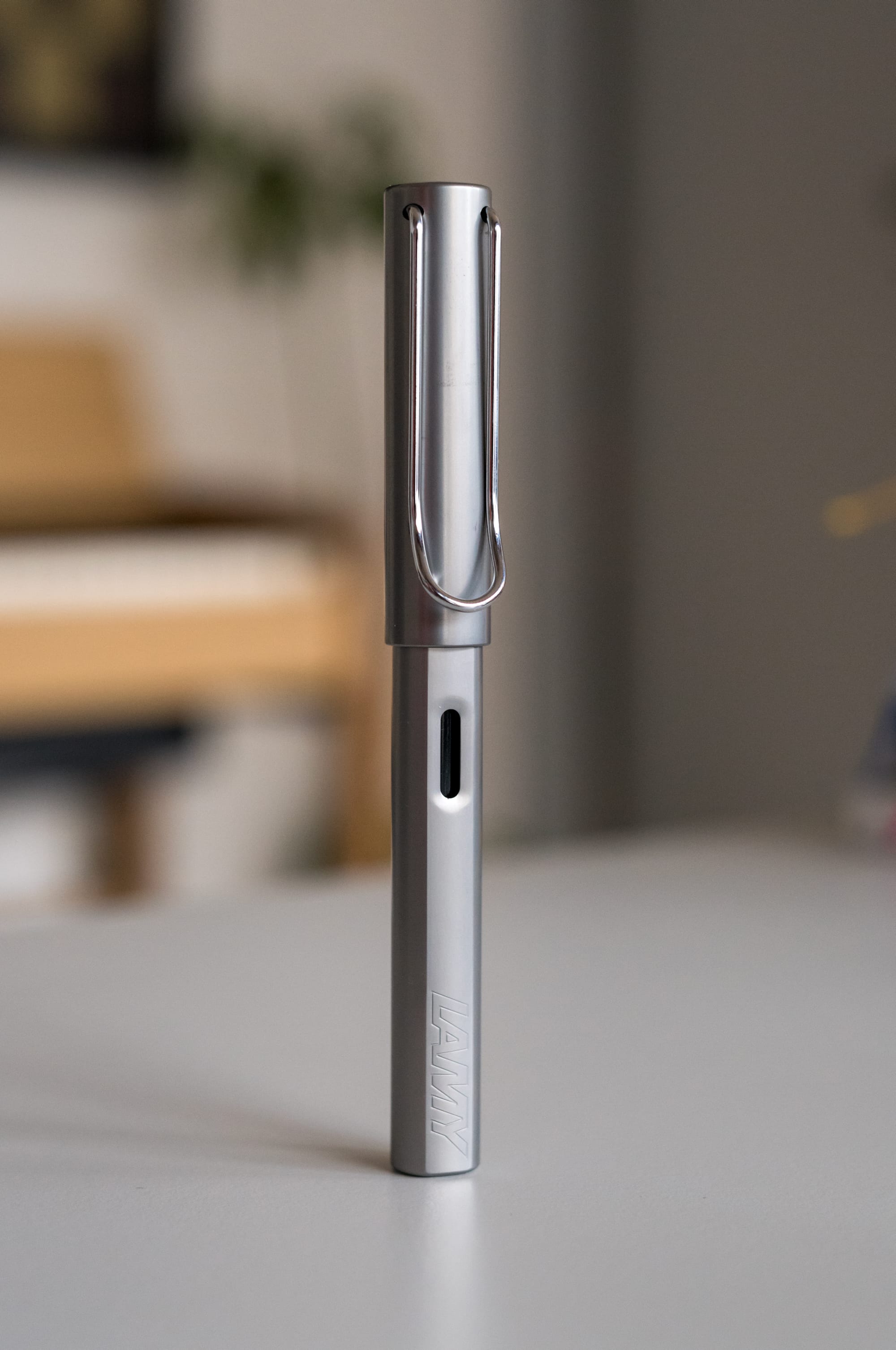
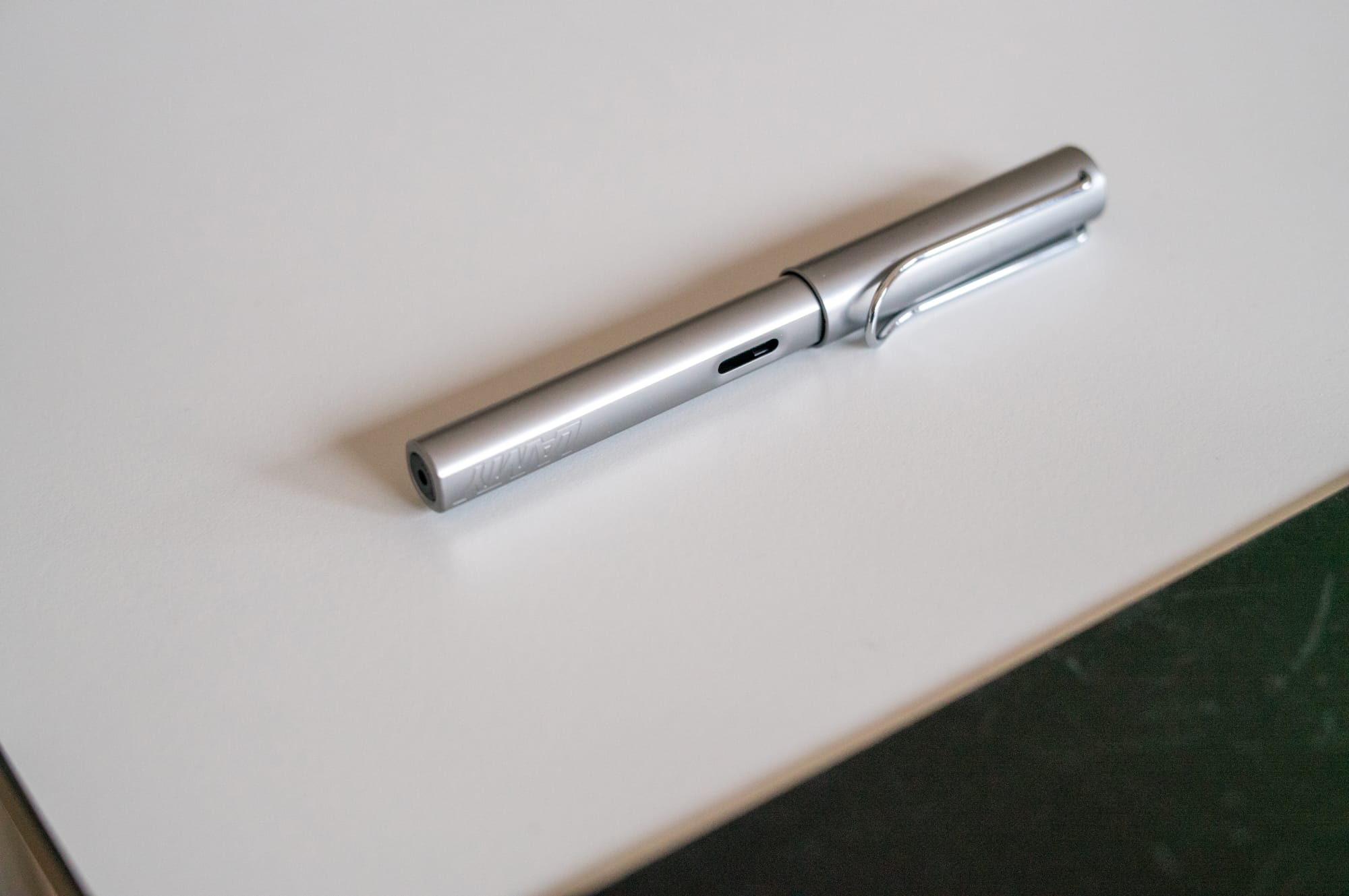
After getting the Lamy 2000, I wasn’t keen on another Lamy, but the Al-Star was inexpensive and I bought it mostly for nostalgia. Back in primary school, I always wondered how the Al-Star would feel in my hand with its aluminum body, and I liked the transparent grip section. I got one, though I didn’t use it much. The nib was M, and I discovered that I don’t like medium nibs on Lamys. It now belongs to my son.
Montblanc Rouge et Noir
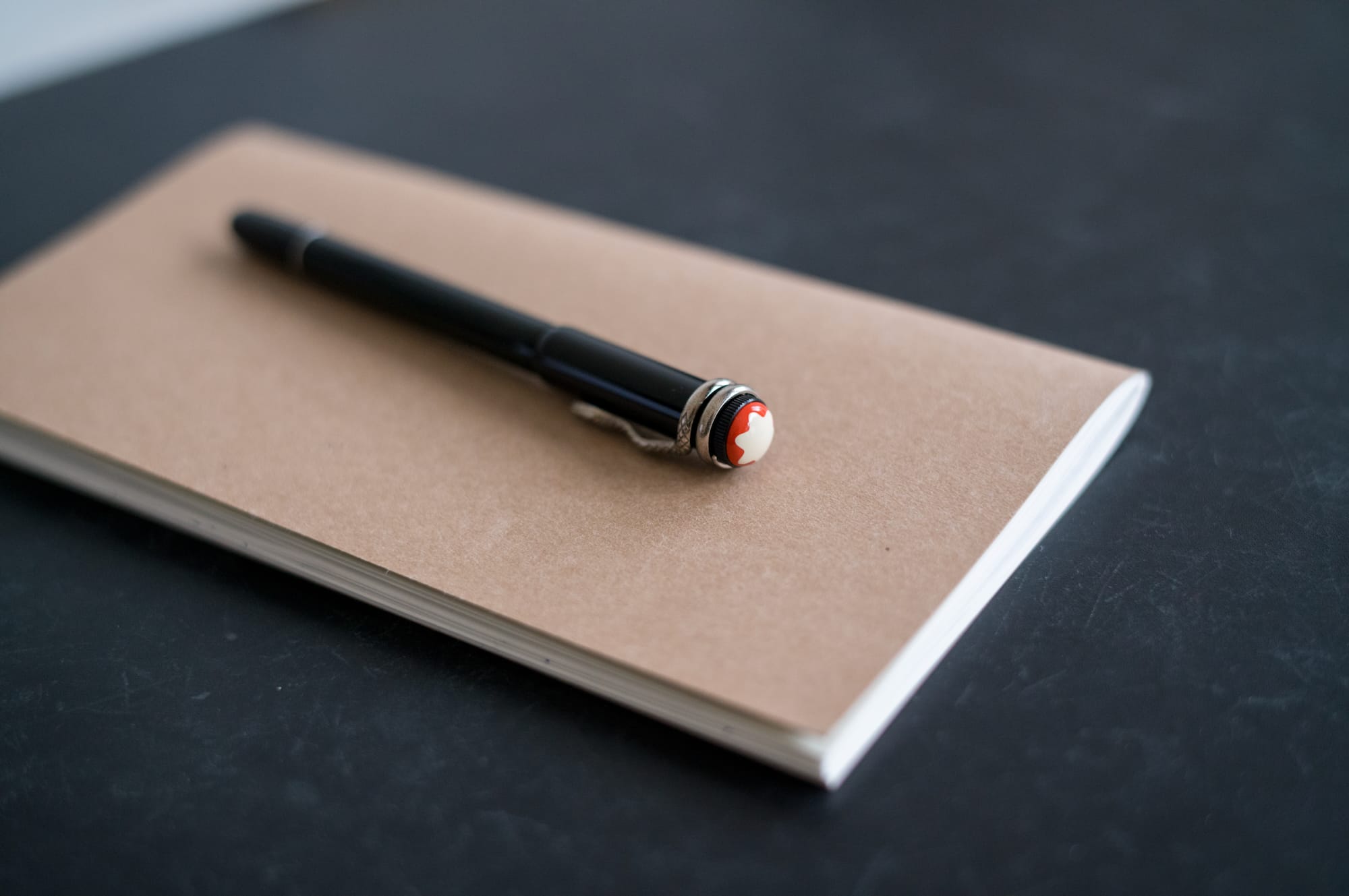
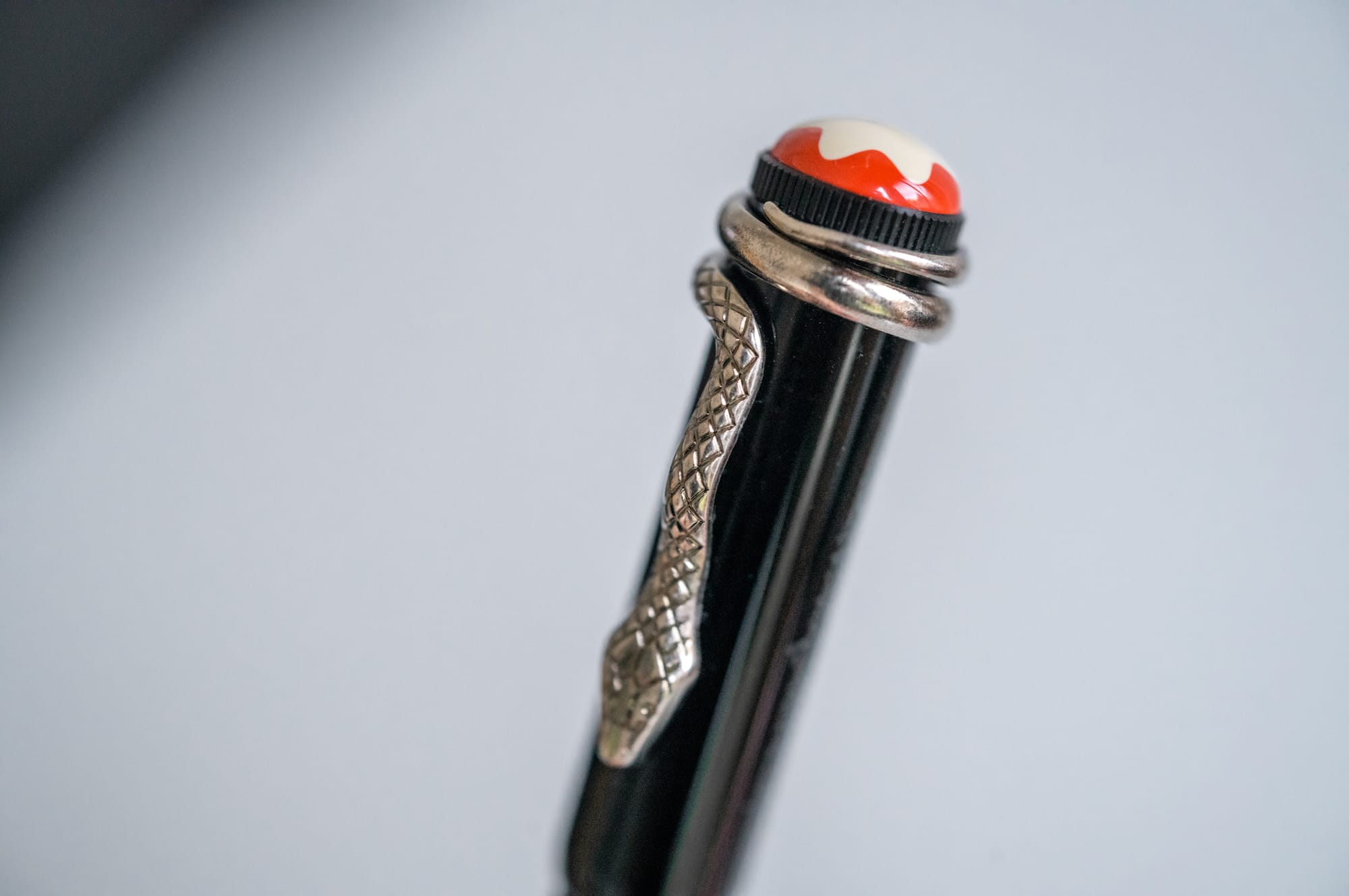
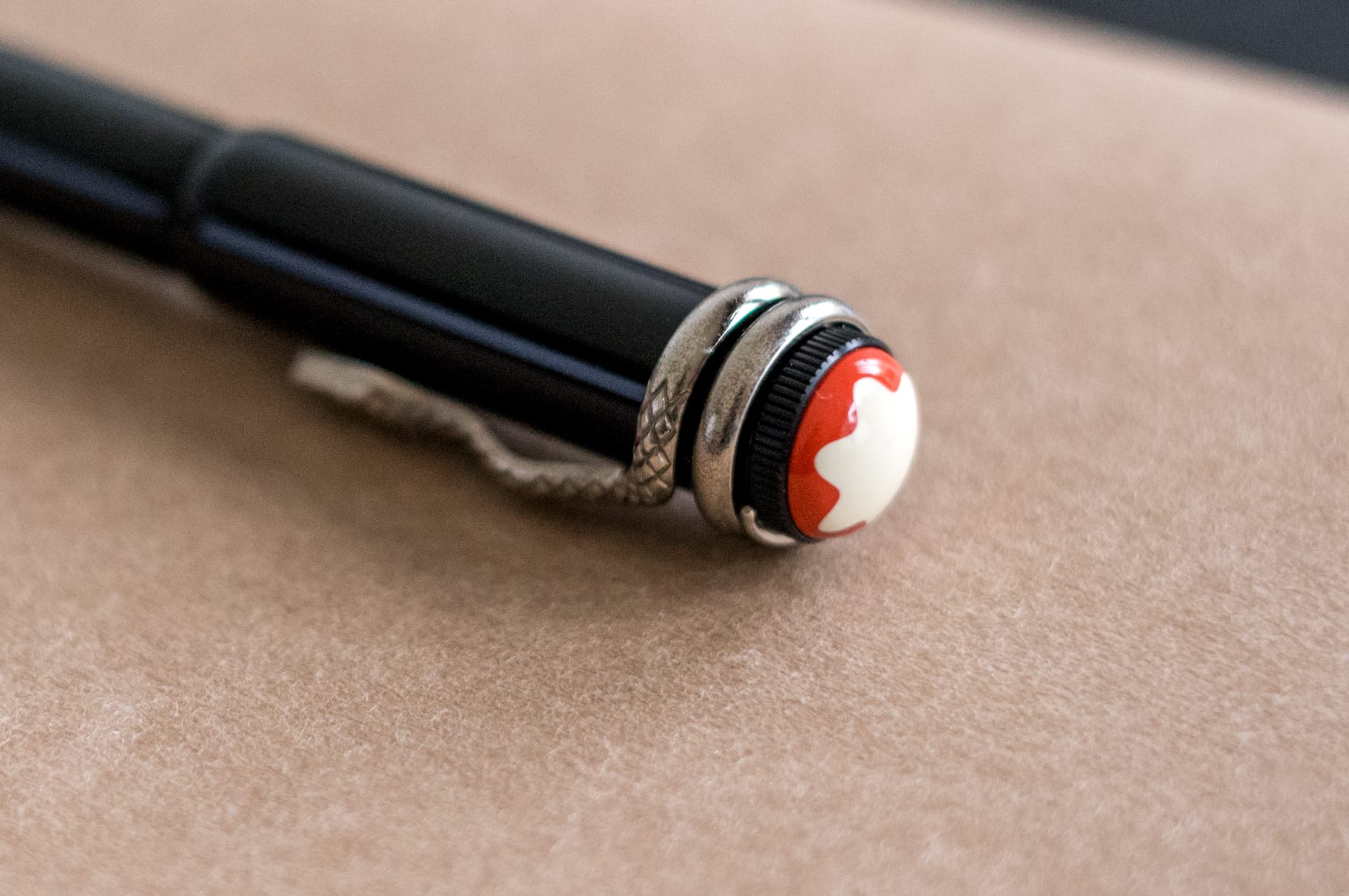
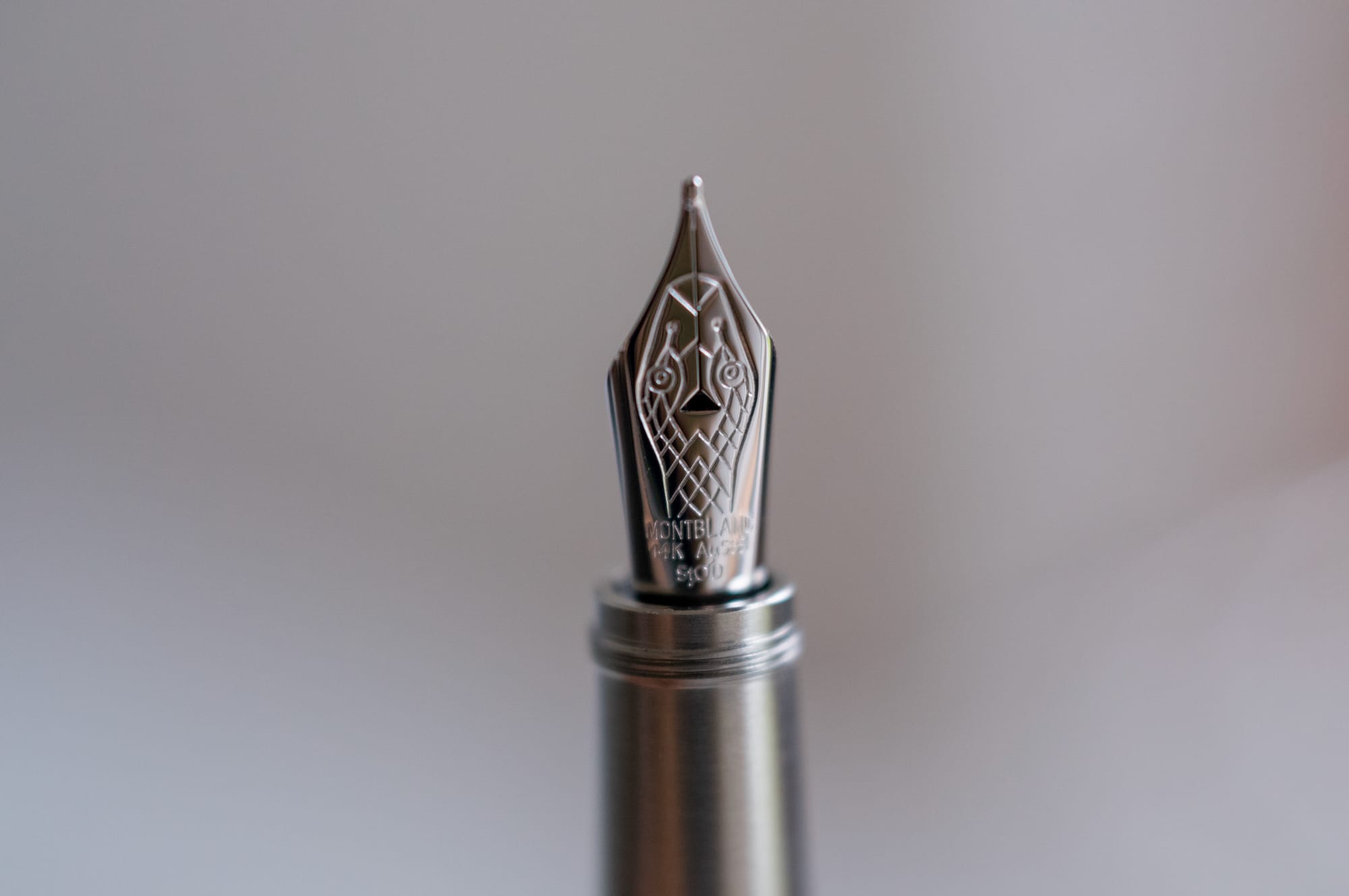
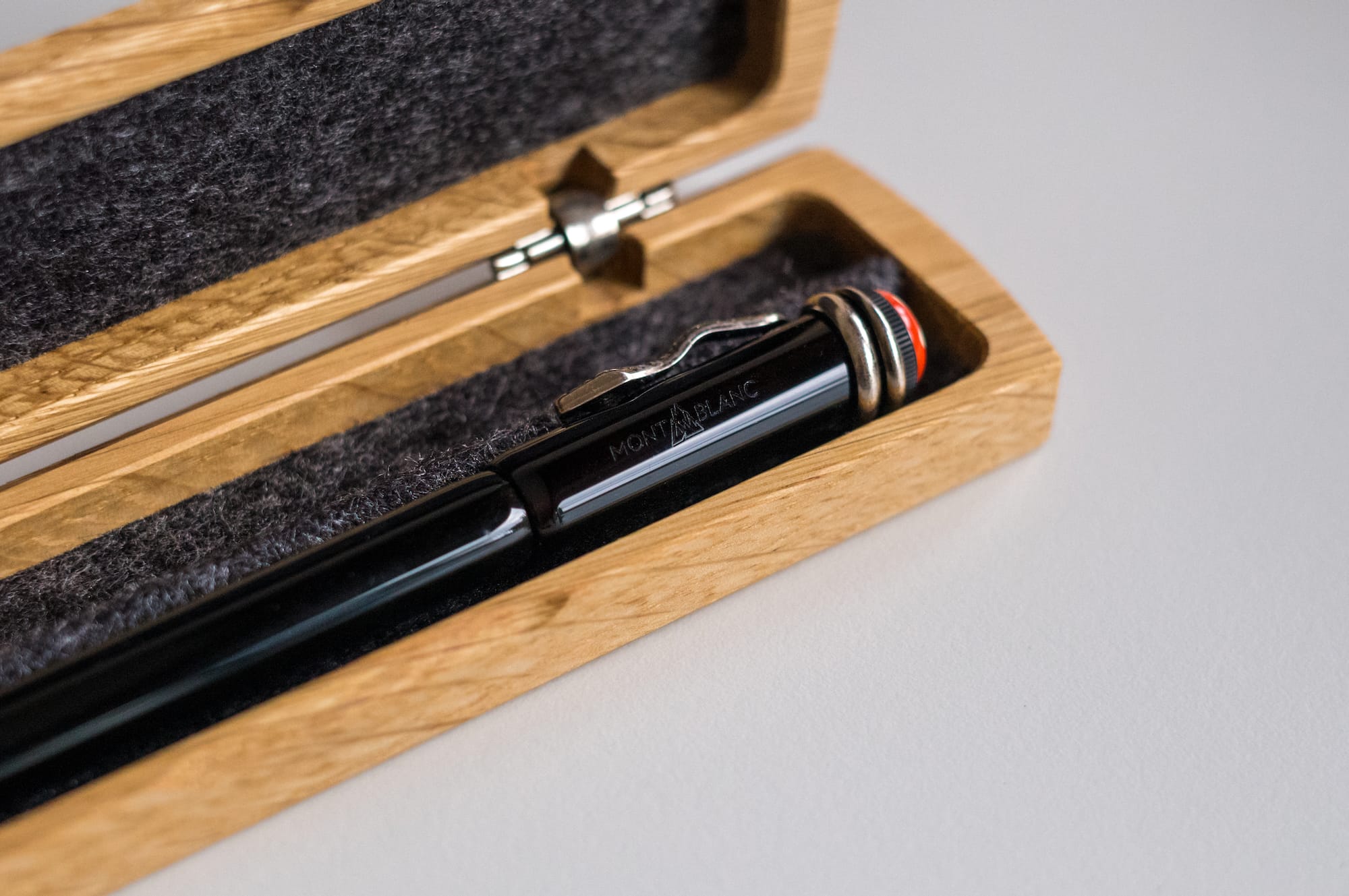
My first ever Montblanc. A gift from my wife for my 40th birthday. It’s beautiful, small, and a delight to use. It’s full of details and I like how it’s an homage to one of the first fountain pens Montblanc created. Montblanc is on a totally different level than anything I had used before.
The nib is ornamented and made of gold. The cap has great details, including the iconic Montblanc snowcap. The body is made of precious resin; even though it might look like plastic in pictures, the feel and reflections are completely different. It also writes much better than any pen I had used until then. The nib is an F, though it doesn’t feel like the F nib on my Lamy 2000. It feels like something between F and M. I use it as my travel pen because it’s smaller than the others and easy to carry.
Montblanc Meisterstück Le Grand (146), Haus Edition
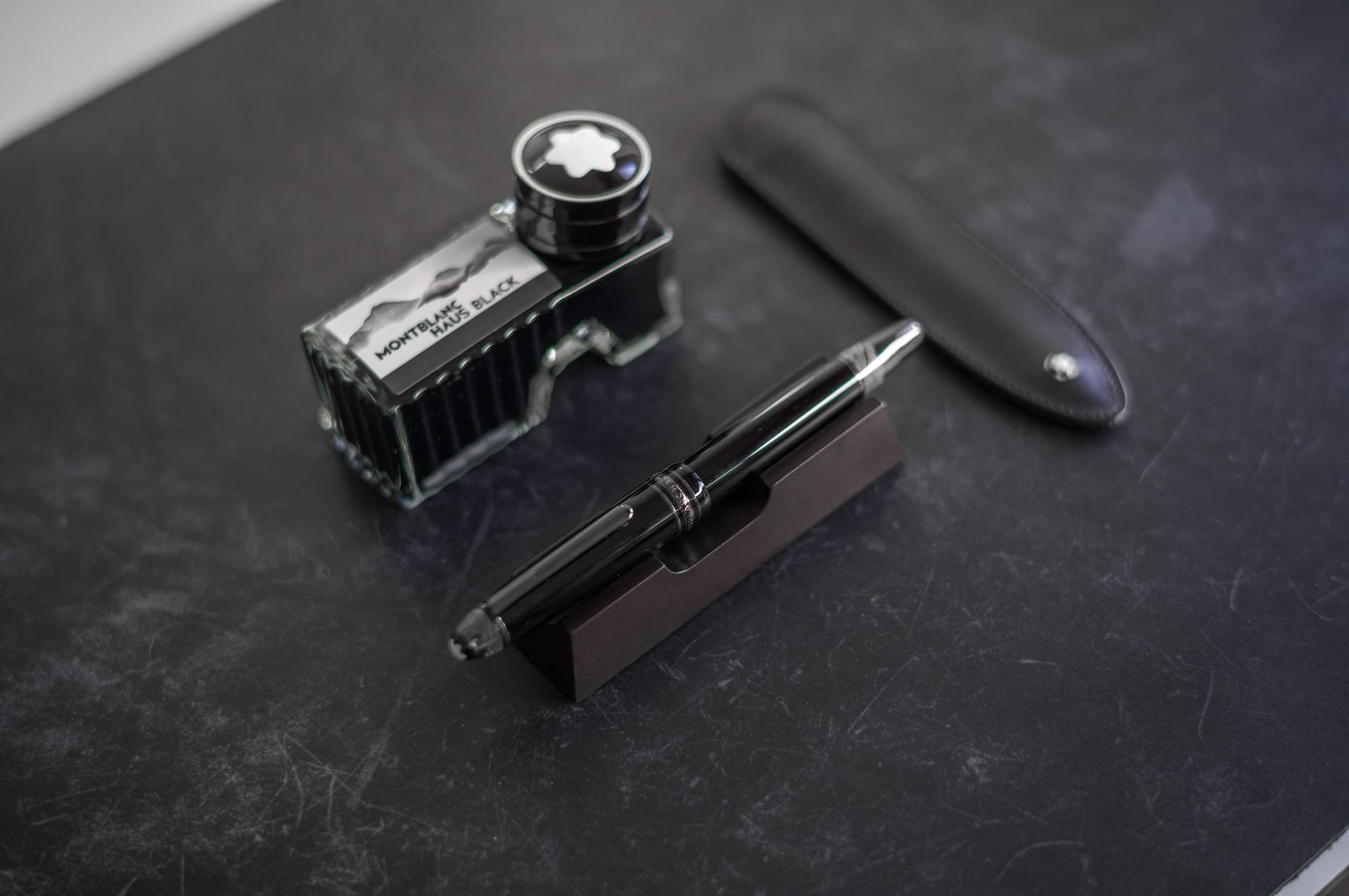
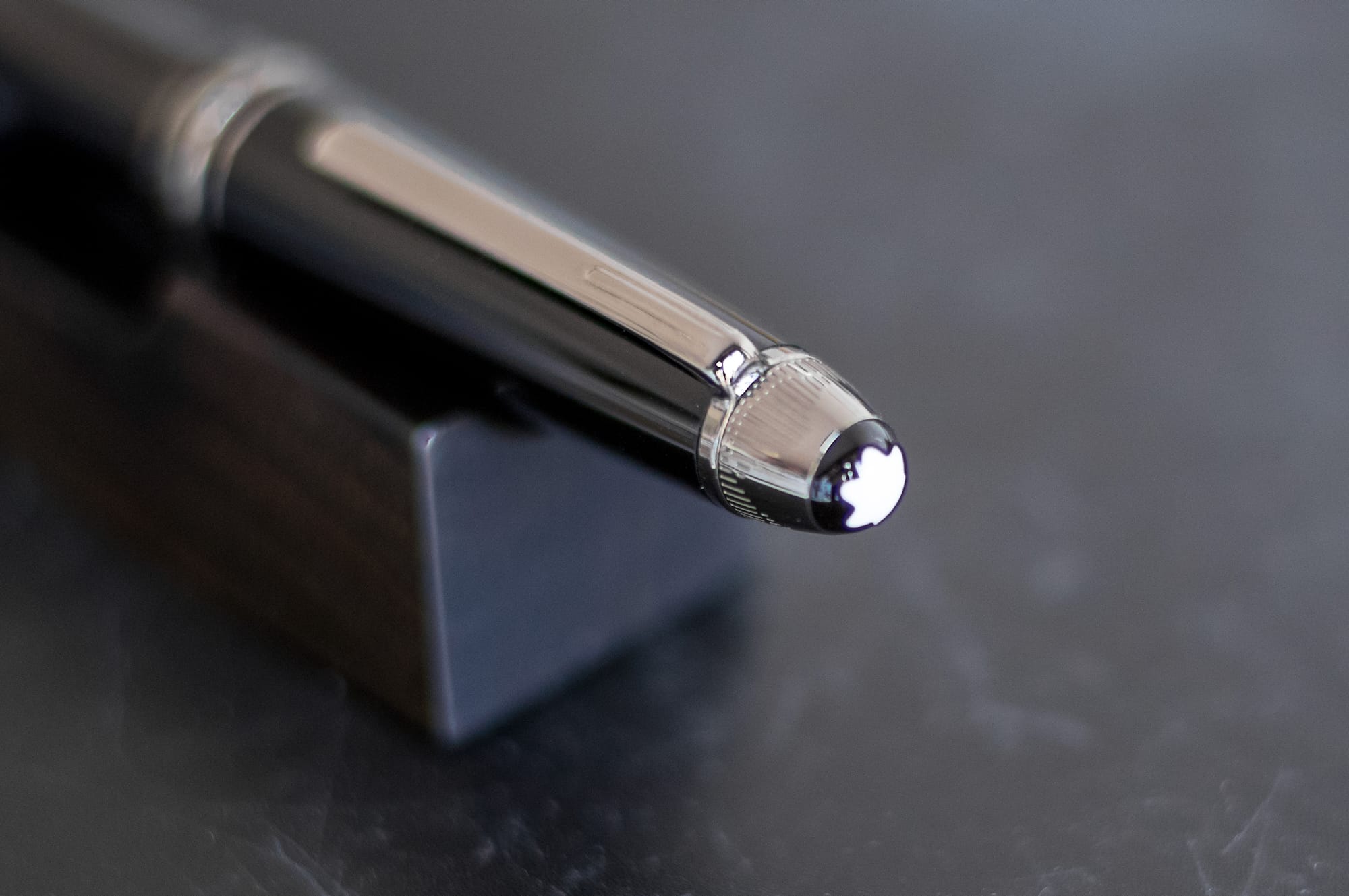
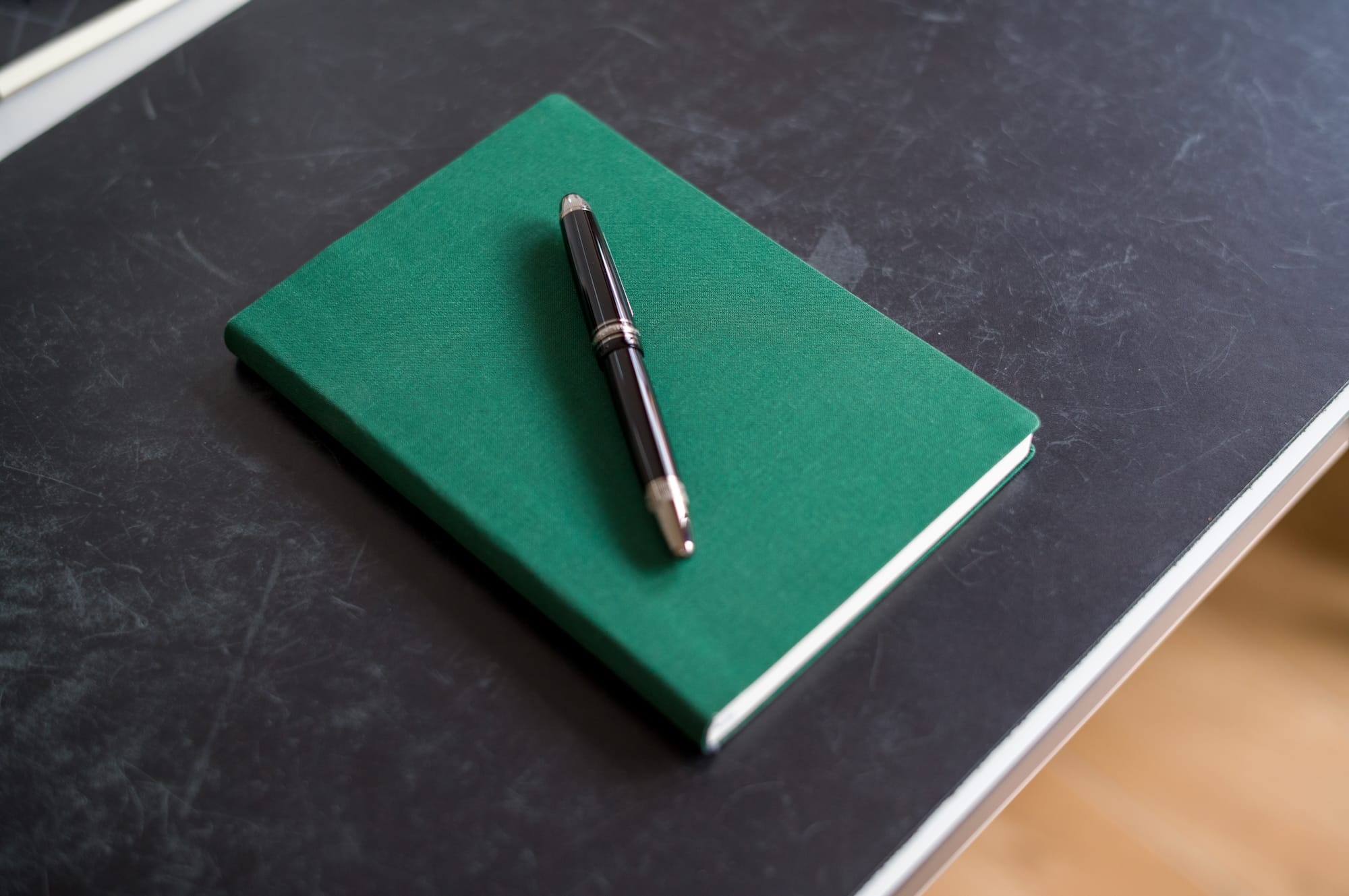
This was an impromptu purchase. I always wanted to own a Montblanc 146 or 149, probably their most iconic fountain pens. When I visited Hamburg, I also visited the Montblanc Haus, their manufacture and museum. It offers factory tours, exhibits, and a boutique. It’s beautiful if you’re into fountain pens or simply enjoy design and history.
After spending hours there, I went to the boutique and looked around. I saw that they had an ink available only at this location. I thought that would make a nice souvenir, but then the boutique employee and I started talking about fountain pens and inks. He really disliked Permanent Blue Ink because it’s messy and hard to deal with.
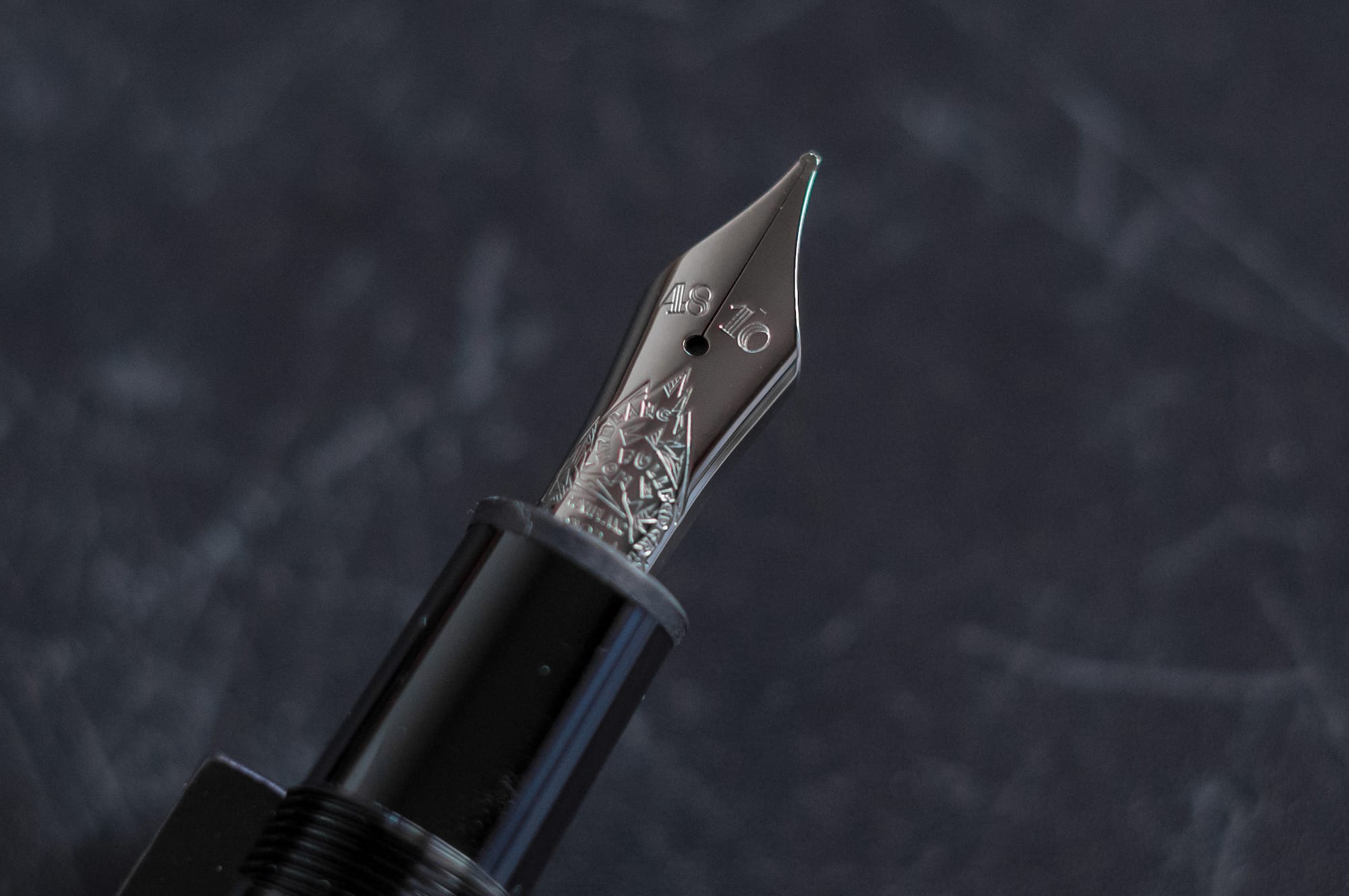
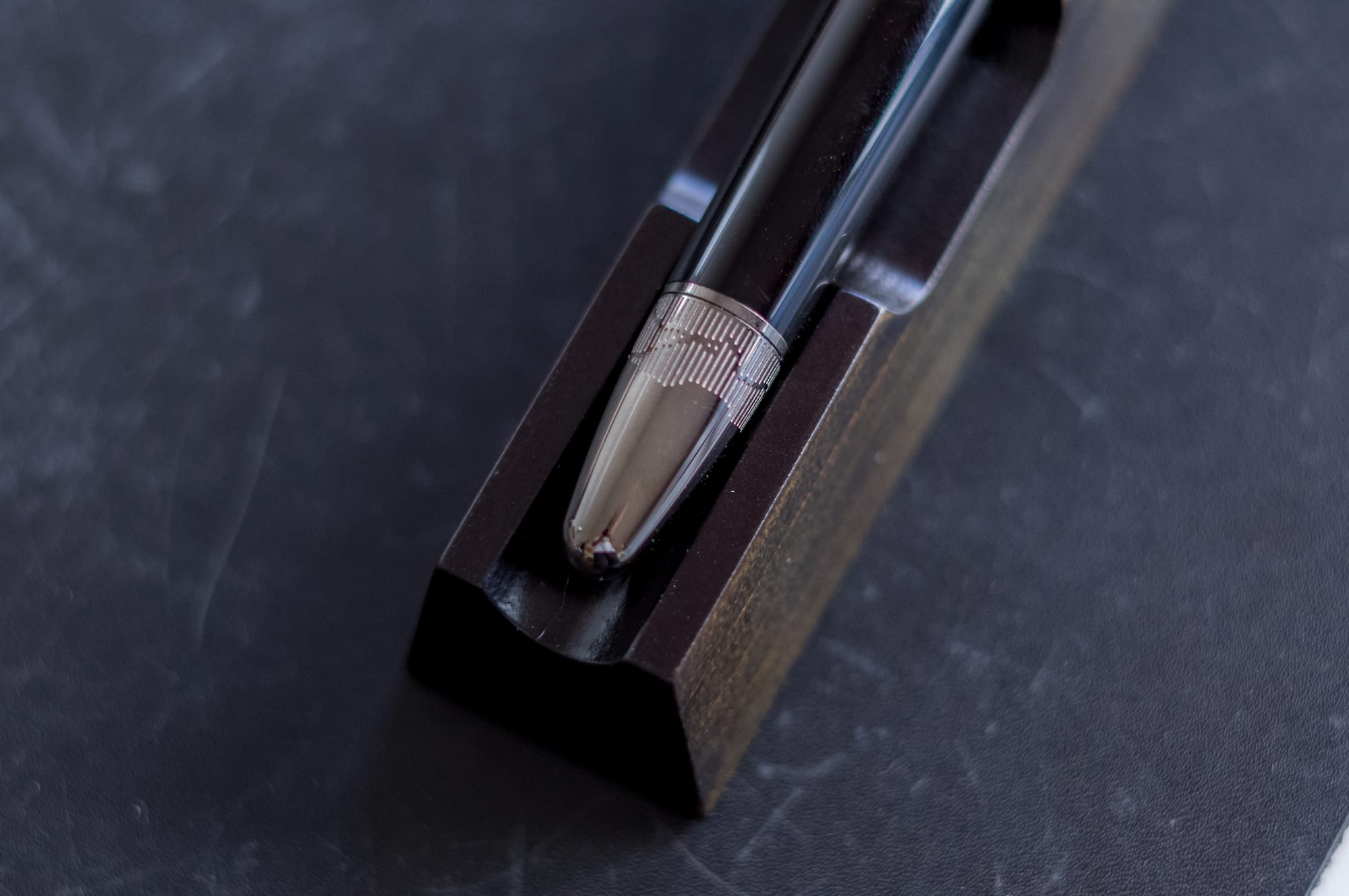
When I mentioned that I wanted a 146 or 149 at some point, he told me about the Meisterstück Haus Edition, which is sold only at the Montblanc Haus. I loved the design with the steel end and the mountain engravings. This pen is now my go-to pen for long writing sessions and journaling. I got it with a medium nib because I wanted to see how it feels compared to a fine. Just like my other Montblanc, it’s very nice to write with.
Otto Hutt design08
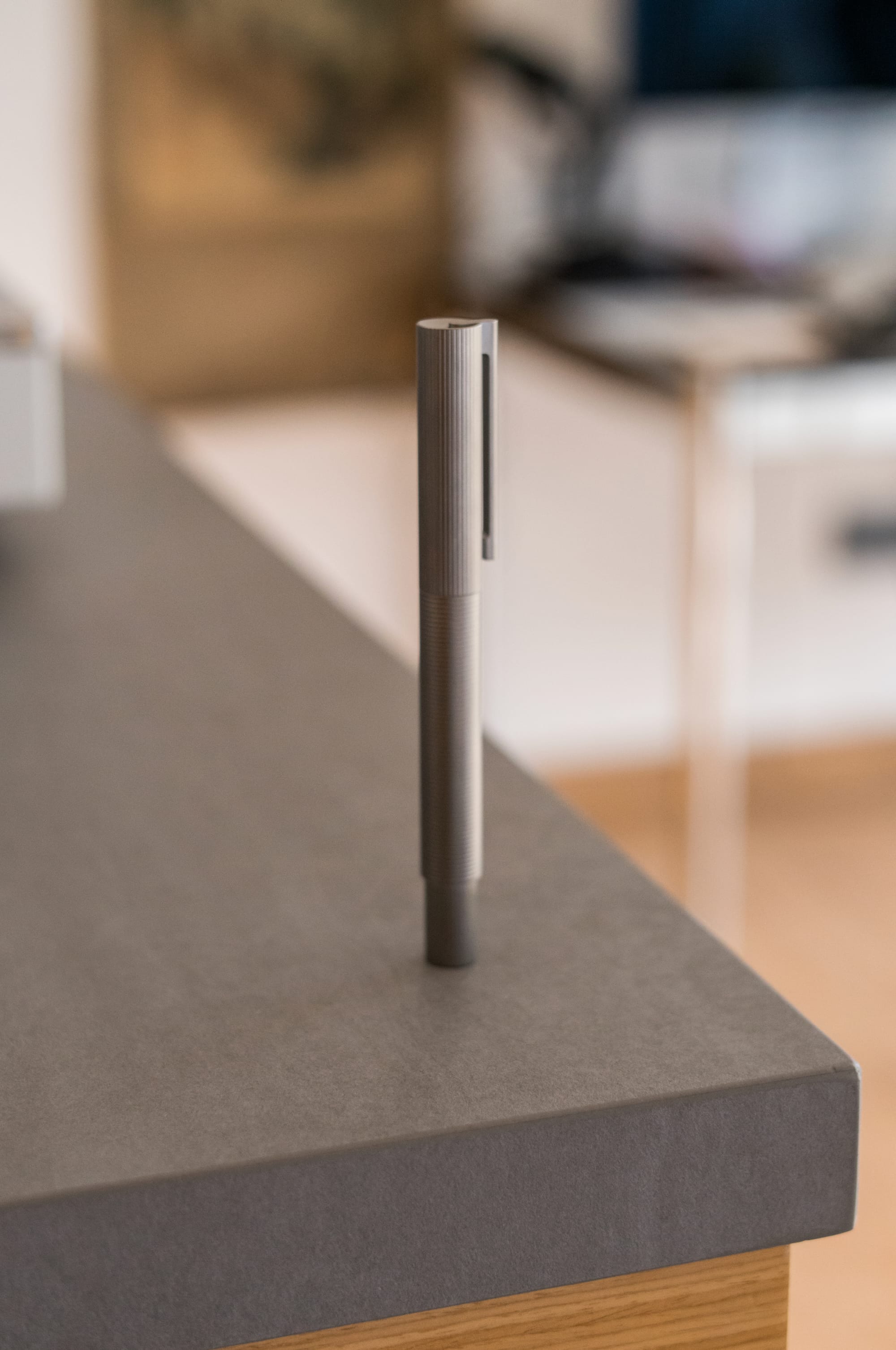
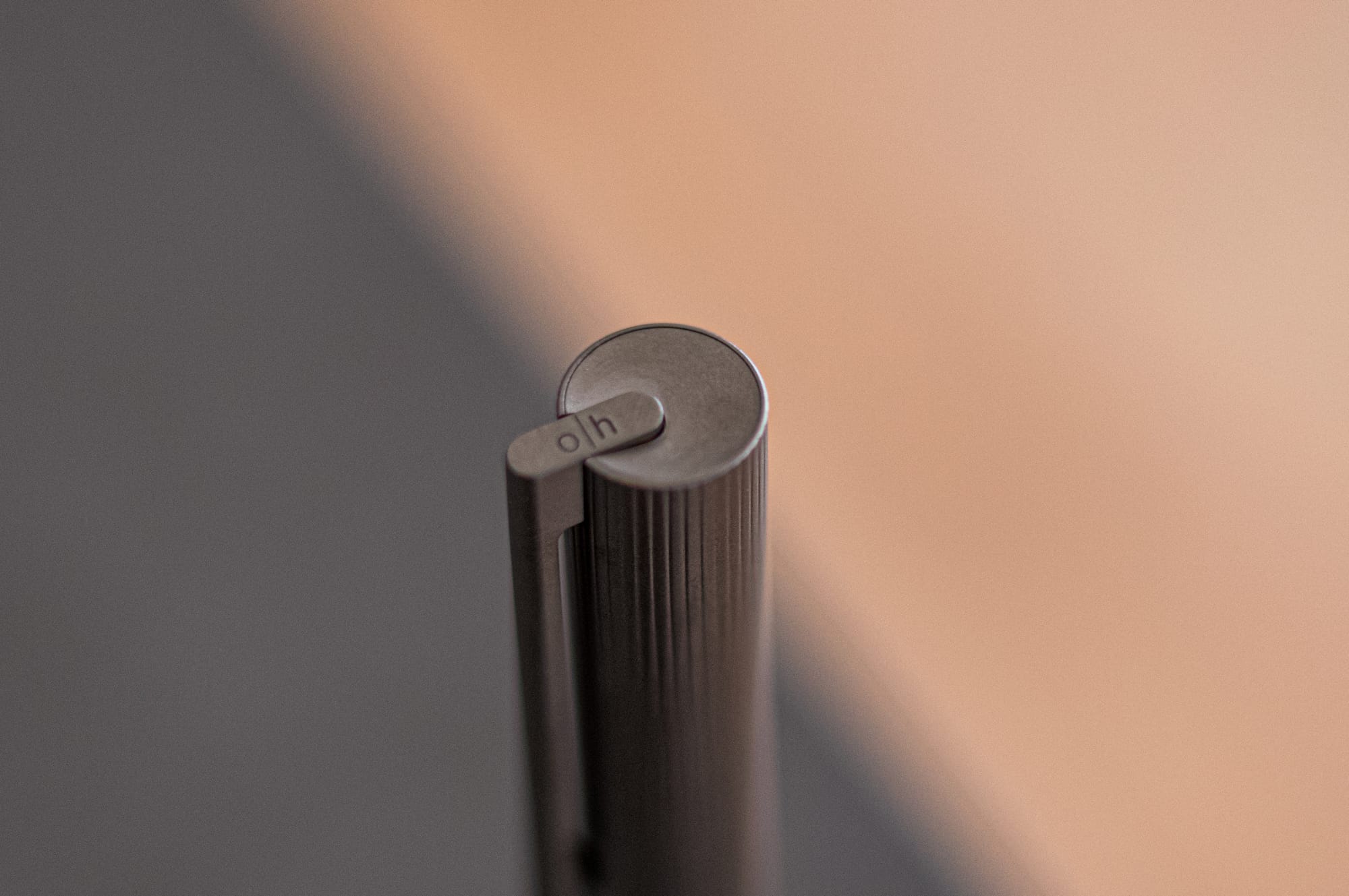
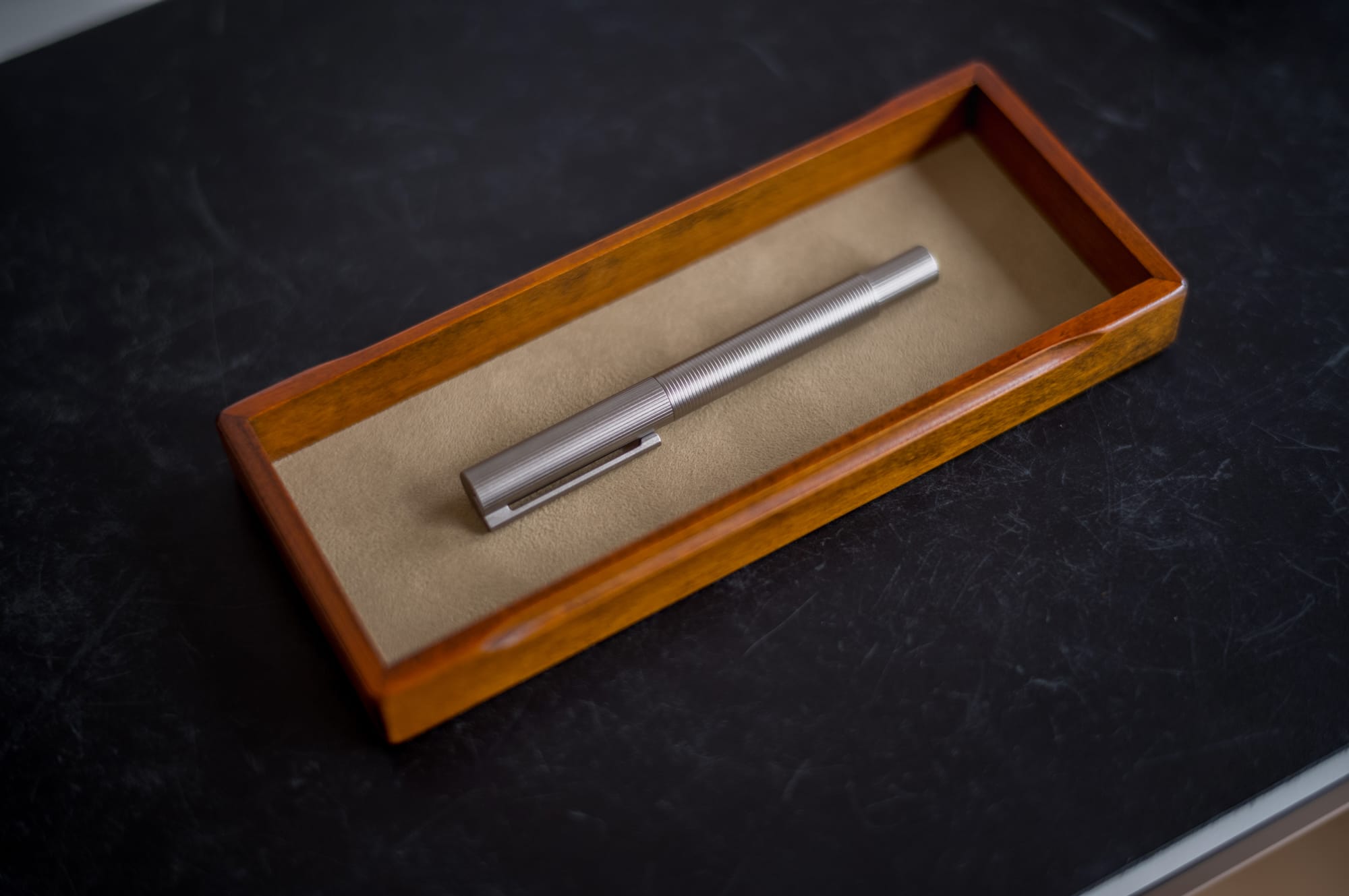
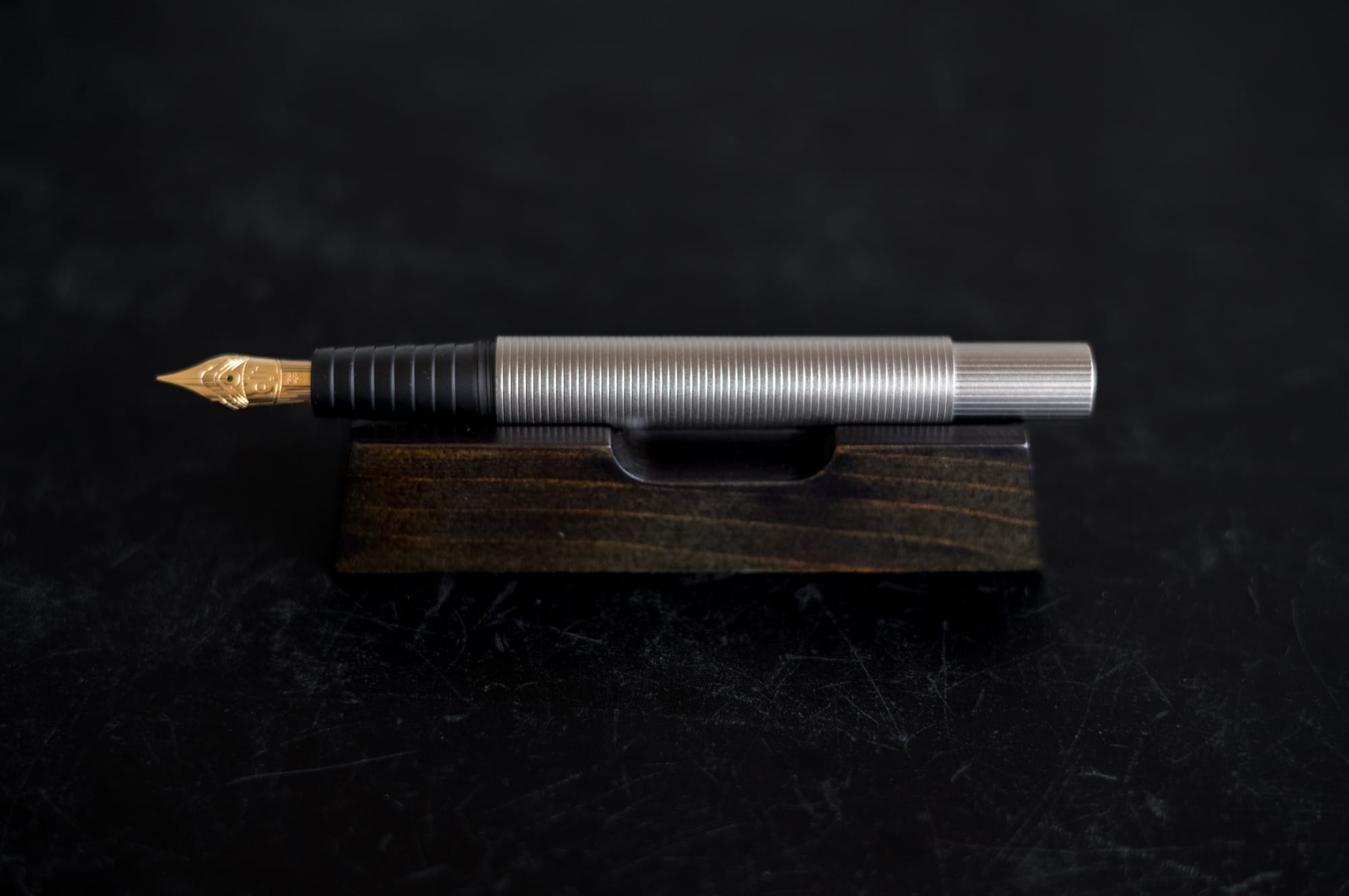
I first heard about this pen from a friend who knows my love for Dieter Rams and Bauhaus. This fountain pen was designed by Mark Braun, whom I have followed for years. I also have a Nomos watch designed by him, so his design language speaks to me.
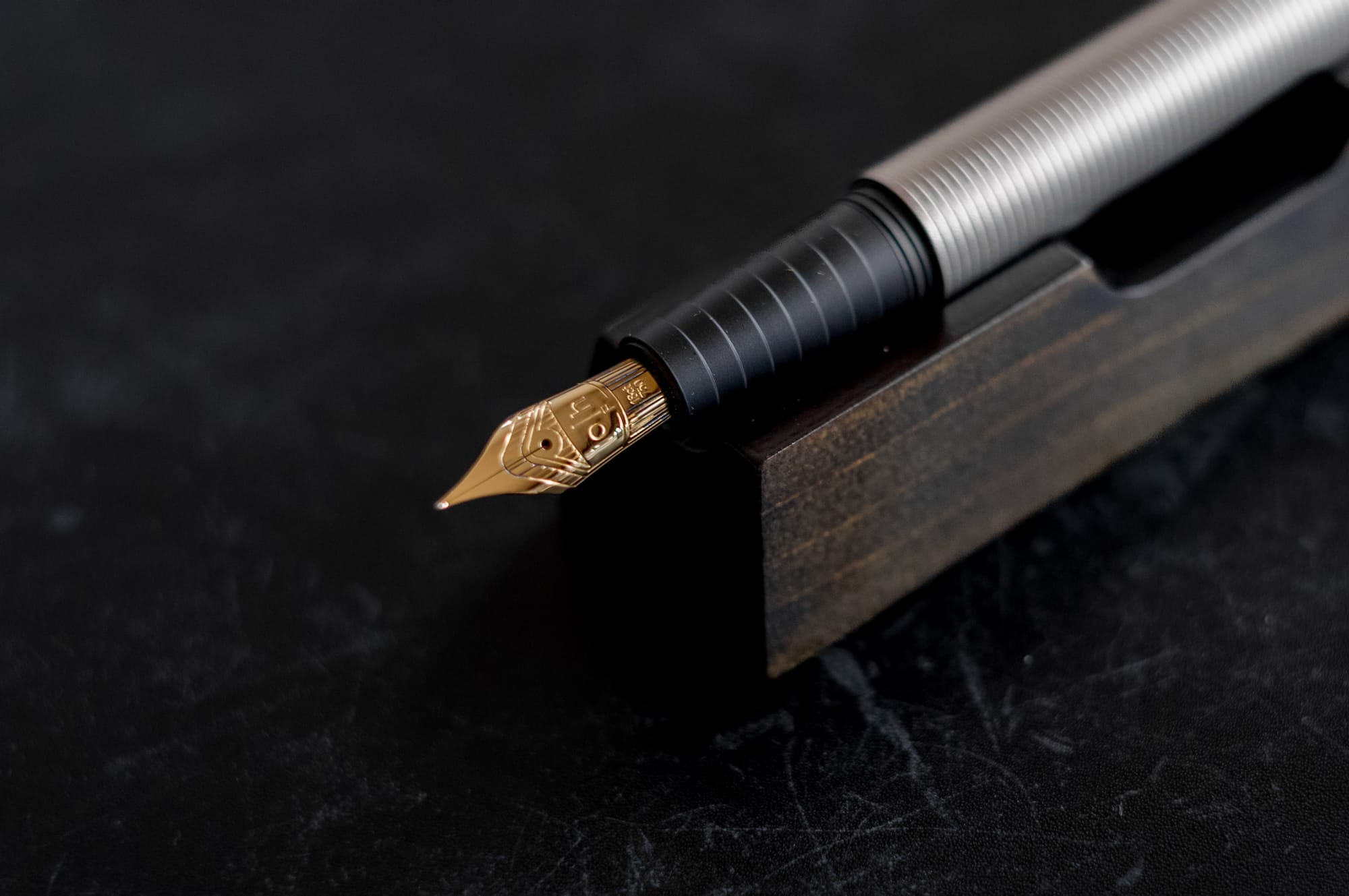
The Otto Hutt design08 is a fountain pen where form and function work as a single idea. The guilloché surface isn’t decoration; it has purpose. The cap shows how the pen opens and how the filling system works. The piston mechanism is also quite different. On my Lamy 2000 and Montblancs I only twist, but for the Design 08 I have to pull first and then twist. I can’t say it’s my favorite mechanism, but it works fine.
It’s also heavy, made of solid brass, and has a large 18k gold nib. Compared to my other pens which are 14k, this one is more flexible. It’s one of my favorites design-wise. Very different from a Montblanc, and not something everyone will like. But as someone who loves Dieter Rams and Bauhaus, it speaks to me.
Montblanc M (Marc Newson)
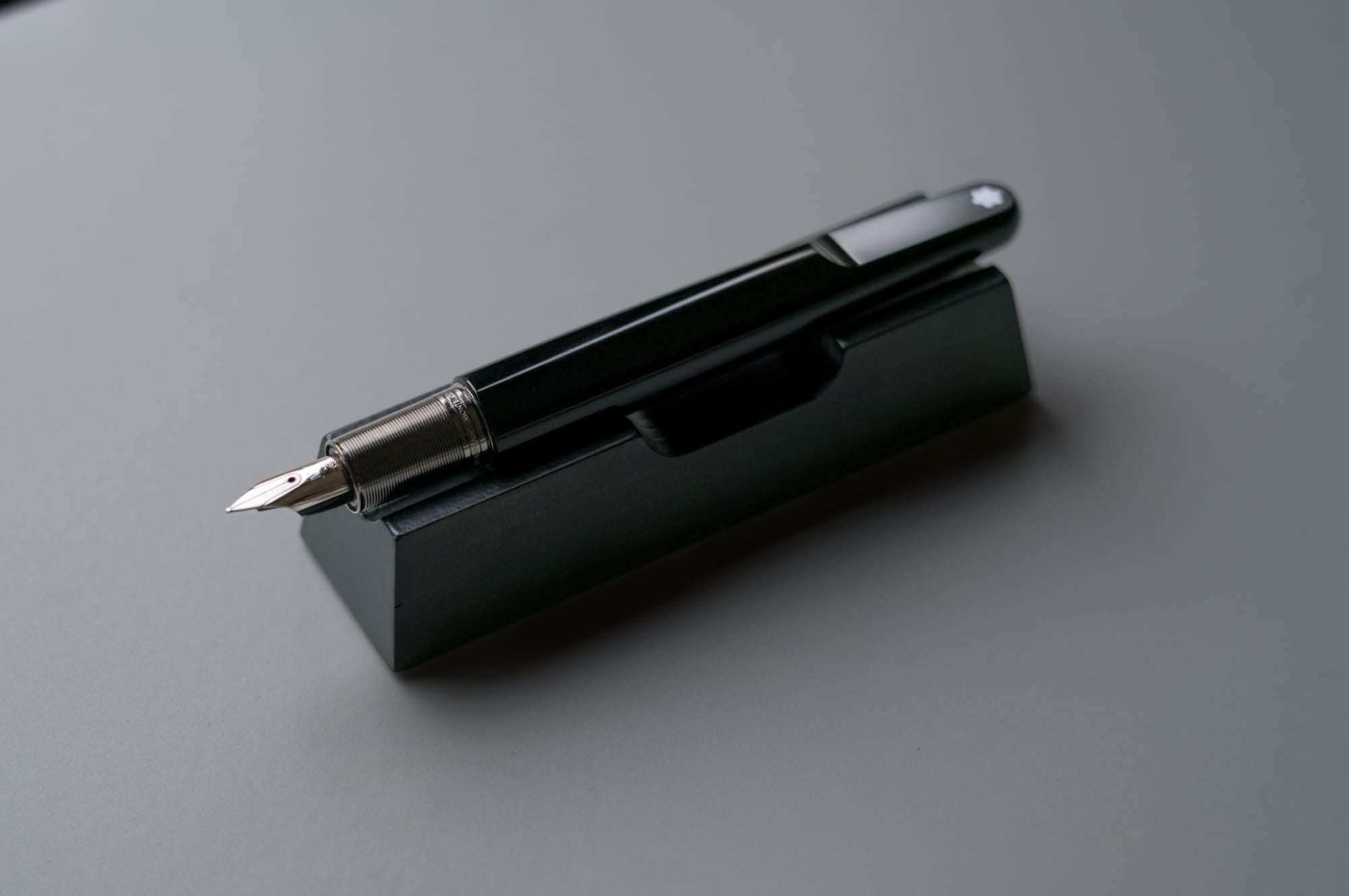
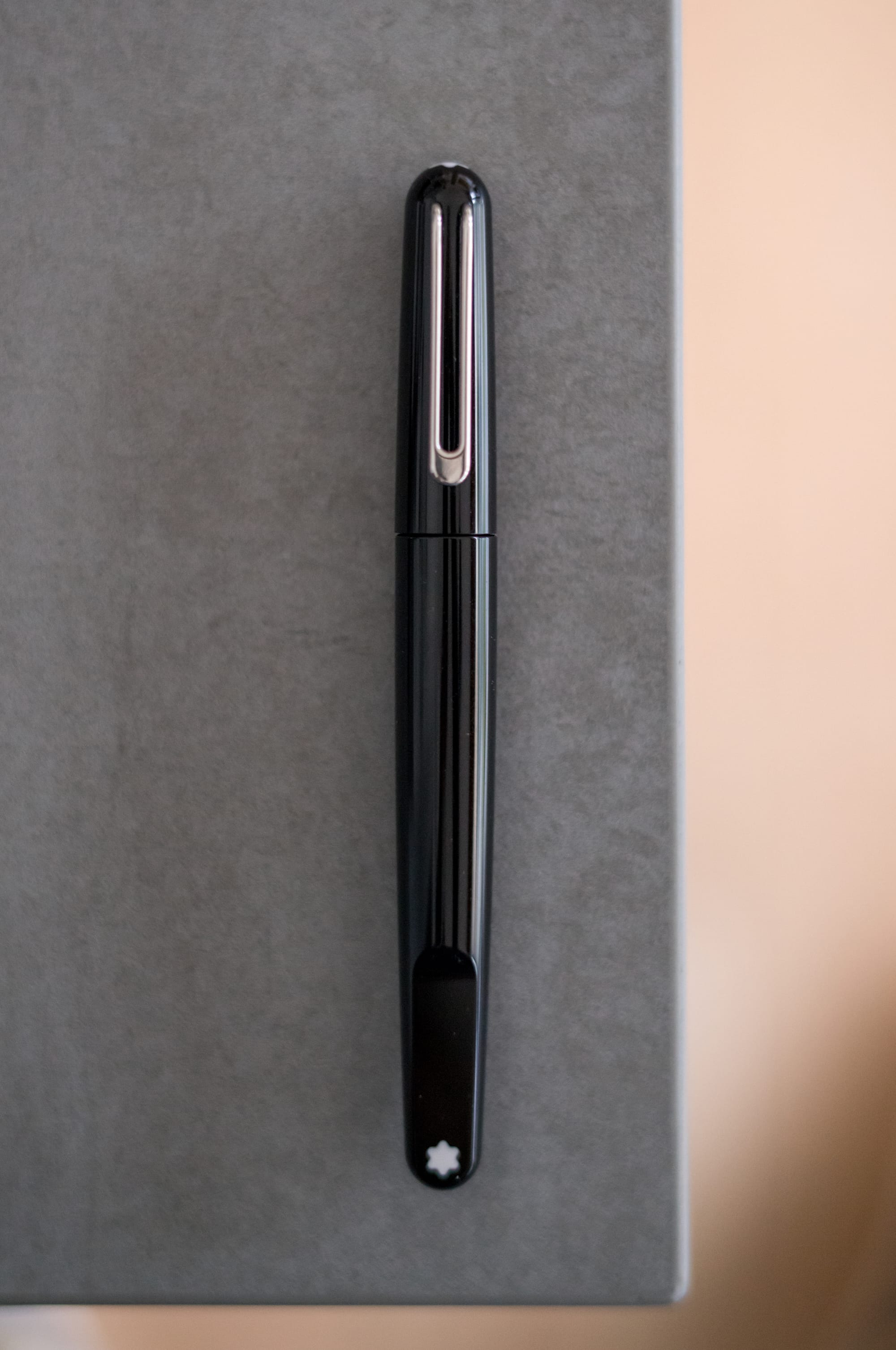
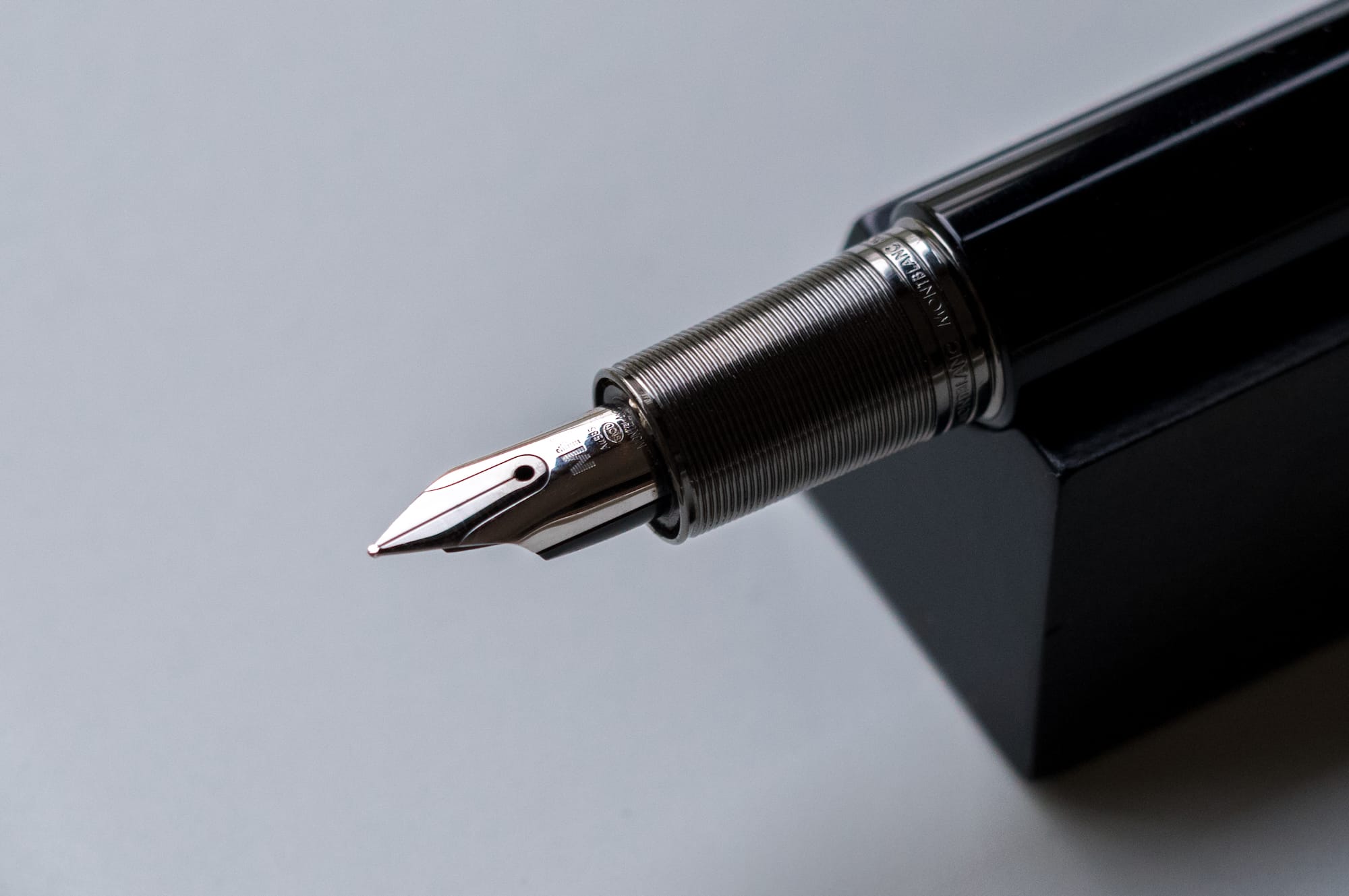
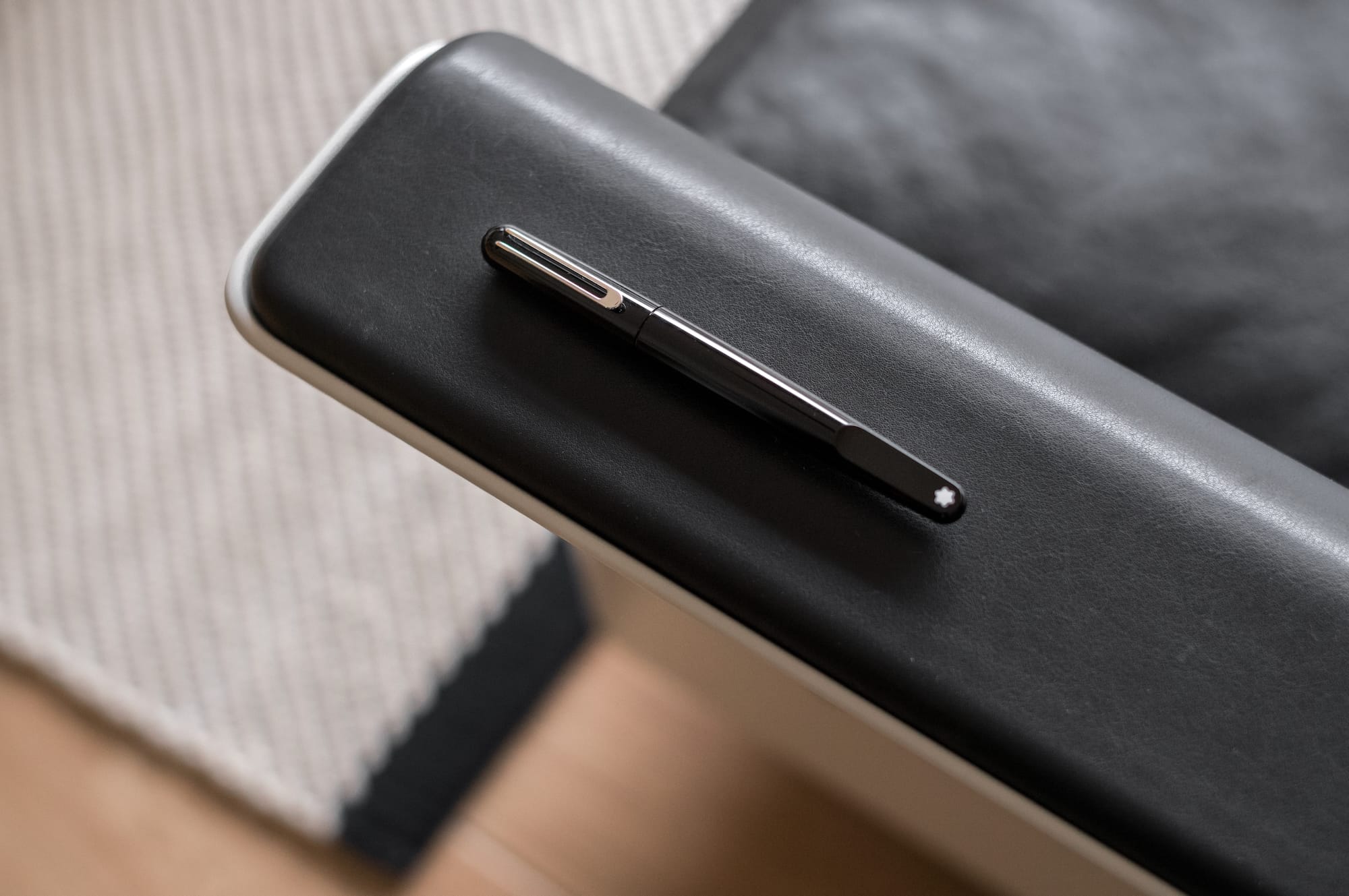
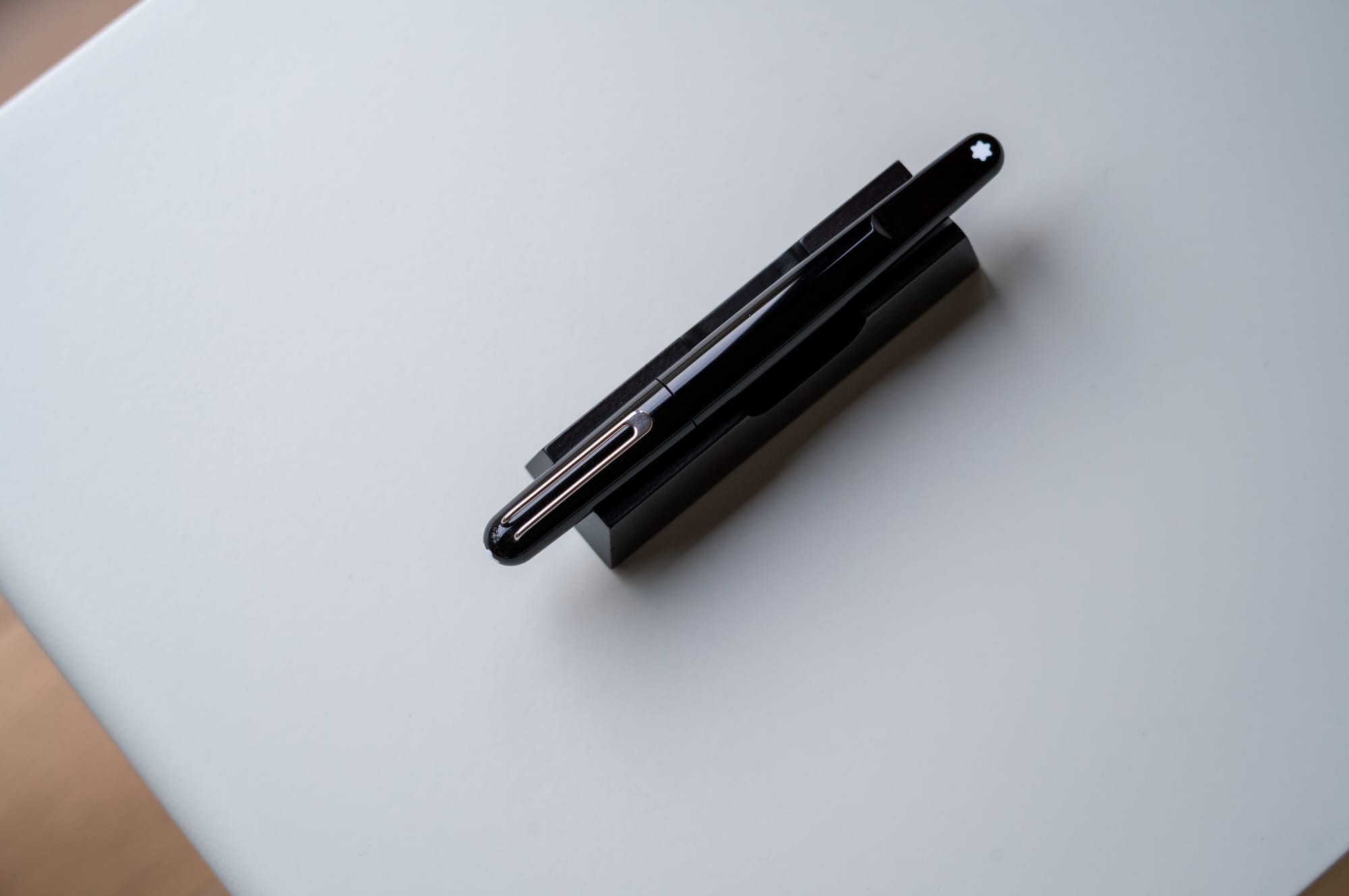
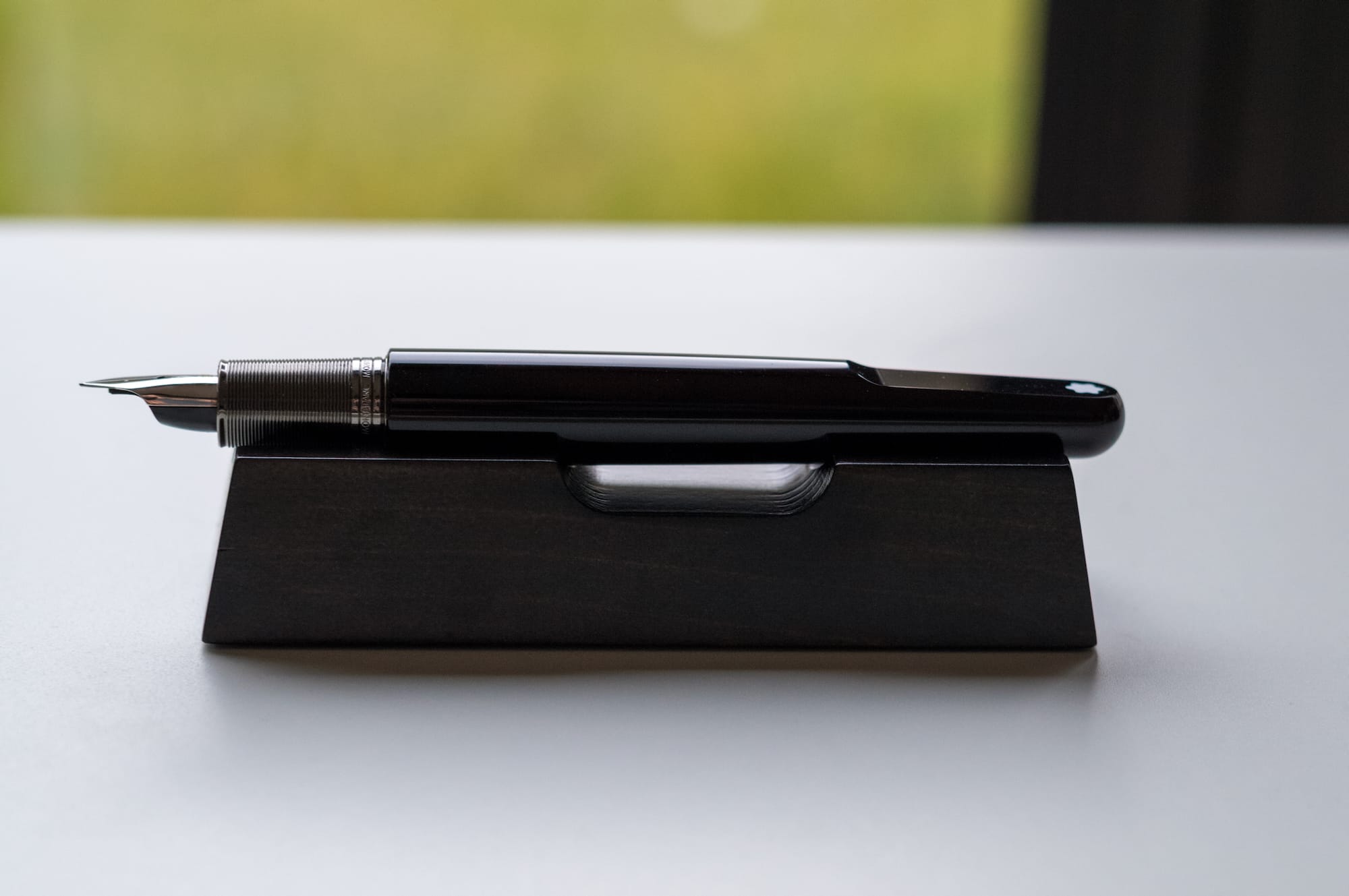
Just like the Design 08, the Montblanc M by Marc Newson has a very contemporary design. It’s built around a single idea: everything should flow. The design strips away edges and breaks and leaves a continuous silhouette.
A few things are different from other fountain pens. First, the cap isn’t screwed on; it’s held by magnets that align the pen so the Montblanc logo is always positioned correctly. Second, it doesn’t feel like a typical Montblanc. The logo is on the body rather than the end cap, and it doesn’t have a piston filler. You must use cartridges because the body has an extrusion at the end.
This pen is no longer in production, and I got it second-hand. It’s probably not going to be my workhorse, but it’s a great pen to have in my collection.
As you see, my fountain pen collection is a mix of collectables, pens with sentimental value, and pens I use daily for notes or long writing sessions. Fountain pens have a huge following. People are obsessed with them. For example, I don’t have any Japanese fountain pens yet, but I’m thinking of getting one in the future. I also didn’t talk much about inks because I mostly use black or blue, so my ink choices are simple. But I know people who are obsessed with inks and have notebooks full of shade comparisons.
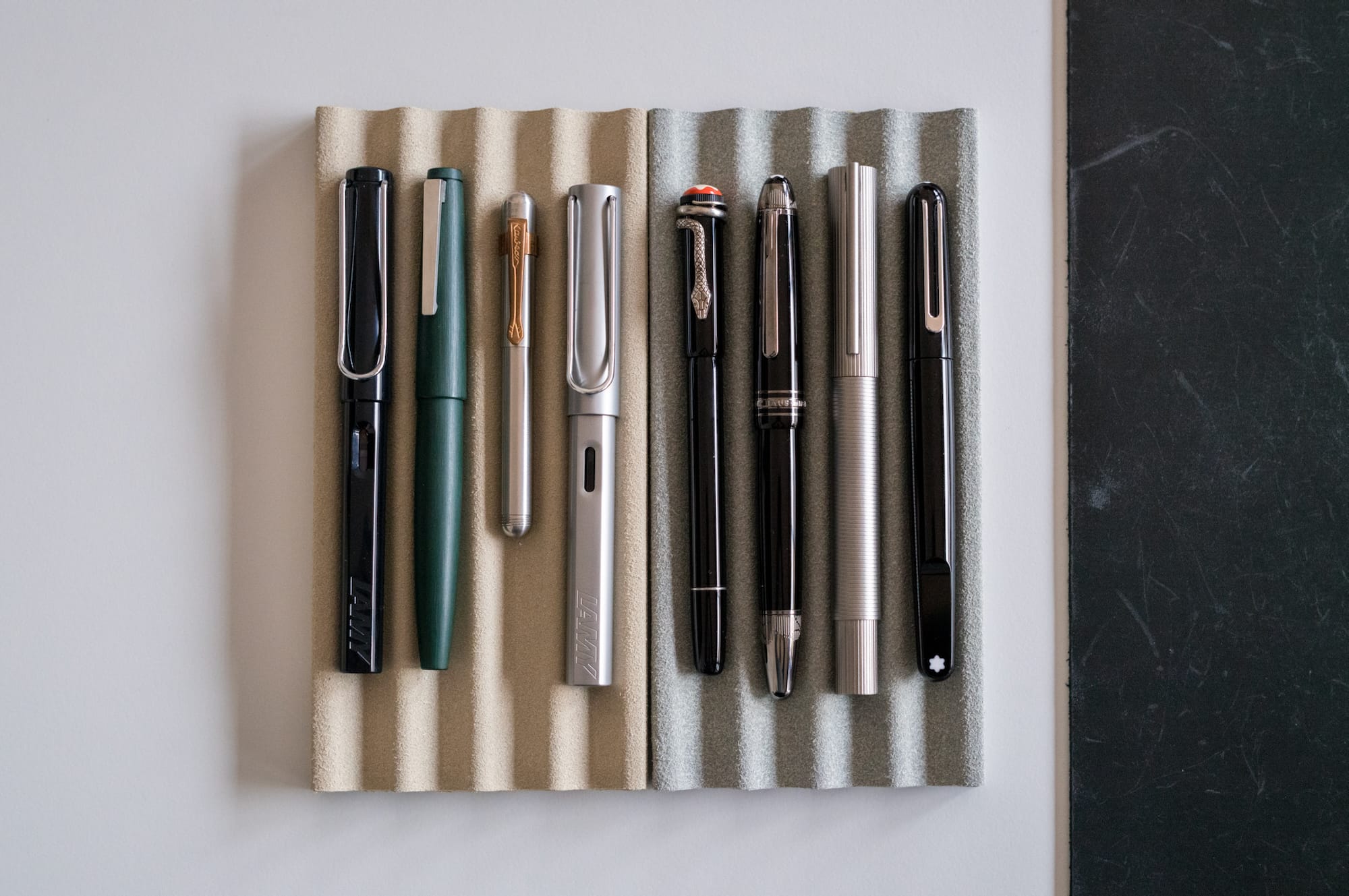
For me, fountain pens allow me to capture ideas and feelings in an easy and almost artistic way. The pens glide and are very comfortable to use. And more importantly, especially with newer designs, I started appreciating the craftsmanship that goes into creating them. As someone who is into design, I appreciate all the details. As Charles Eames said, “The details are not the details. They make the design.” You can feel and experience this with fountain pens, and that’s why I love them.